Visual Humor Why Some Funny Photos Go Viral and Others Flop
Introduction: Why Visual Humor Matters
You know the feeling. You are scrolling through your feed, and a funny pic stops you cold. A cat with a suspicious look. A dog with a perfectly timed caption. You laugh. You hit the share button. Then you move on to the next thing.

But have you ever stopped to wonder why some funny photos go viral while others get ignored? The answer goes deeper than you might think.
Visual humor is a universal language. It does not care if you speak English or Japanese. A well timed funny cats image or a classic "let me know meme dog" expression can make anyone smile. Actually, the best visual jokes work because they tap into shared human experiences. Surprise. Recognition. Relief.
Here is the thing. Understanding the mechanics behind a great funny picture does not ruin the magic. It makes you appreciate it more. And it helps you create content that people actually want to share.
This article is your structured, evidence based guide to the world of visual comedy. We will look at the science behind viral hits, much like the deep dive you can find on the mechanics of viral dog memes. We will break down what makes a funny photo work. And we will give you the tools to understand why you laugh at what you do.
By the end of this guide, you will move from a casual scroller to someone who truly gets the joke. You will start to see the pattern behind the punchline.
1. The Psychology Behind Visual Humor
Have you ever laughed at a funny pic but could not explain why? There is a reason for that. Psychologists have studied this for decades, and they have found three main theories that explain the magic.
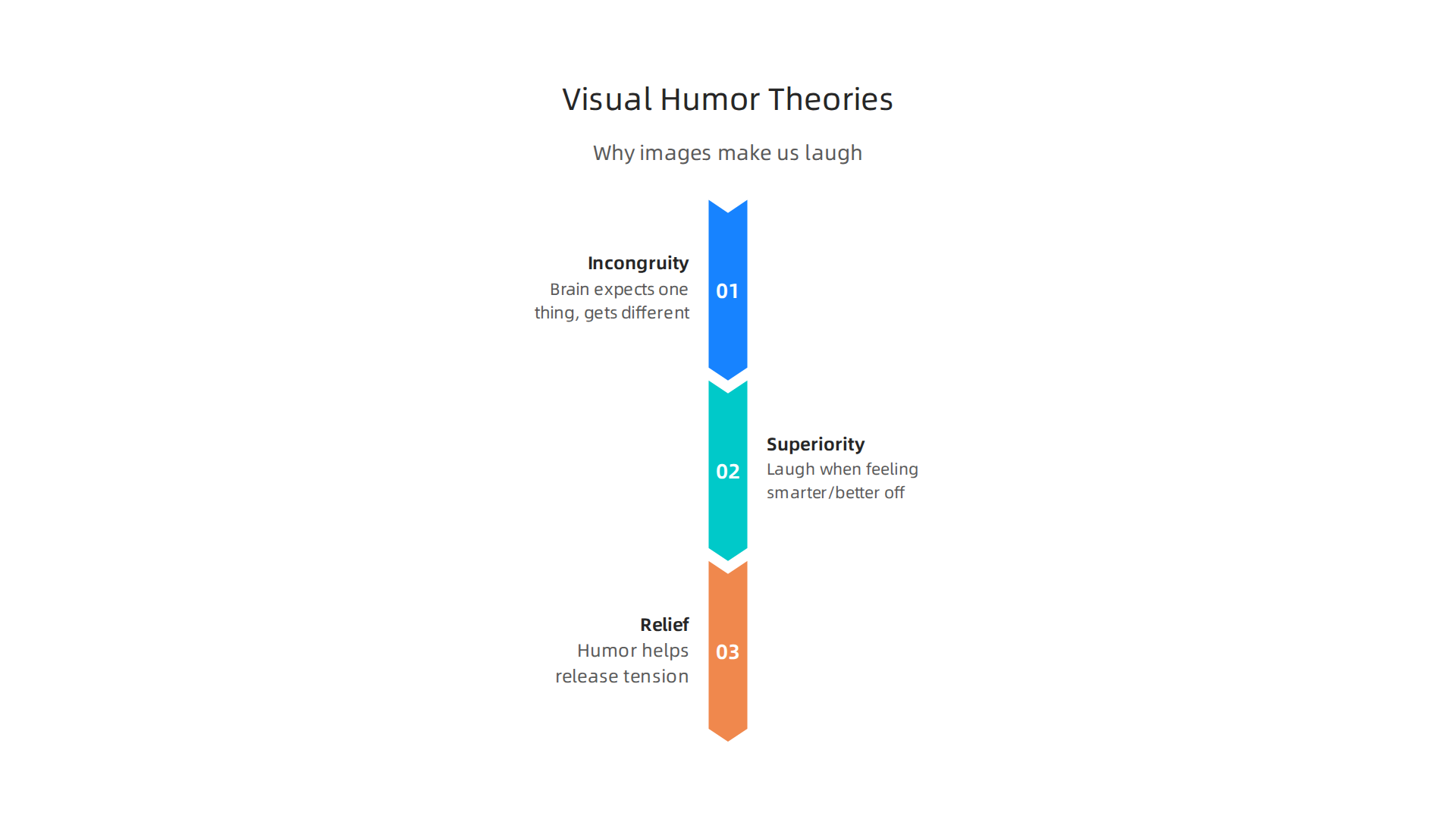
The most popular one is the incongruity theory. This idea says that humor happens when your brain expects one thing but gets something completely different. That moment of surprise triggers a laugh. Think of a classic funny cats image where a cat sits in a totally human pose. The surprise of that mismatch makes you chuckle. According to researchers at Harvard Medical School, humor is an evoked response to shifting expectations.

Your brain loves a good plot twist, even in a two second glance at funny photos.
The second theory is superiority theory. We laugh when we feel a little bit smarter or better off than someone else. That is why a "let me know meme dog" with a confused look can feel so funny. You understand the situation. The dog does not. You feel a tiny sense of relief that you are not the one in that awkward spot. This connects to research that links humor with social bonding and emotional regulation, as explored in the PMC study on the social life of laughter.
The third theory is relief theory. This one says that humor helps us release tension. When you see a funny photo after a long day, it works like a pressure valve. The surprise makes you let go. A 2024 study in Sage Journals even found that humor and fear are deeply connected in the brain. We laugh to cope with anxiety. That is why absurd images often go viral. They break our stress.
And here is the really cool part. Your brain is wired to share these moments. When you see a funny expression on a dog or a cat, your mirror neurons fire. You basically feel the emotion you see. This is why a silly dog face can lift your mood in seconds. We have looked at the mechanics of funny meme pictures of dogs before, and it all comes back to how our brains connect with the image.
So the next time you scroll past funny pics and stop to smile, remember this. You are not just reacting. You are following a very old, very human program.
2. Classic Formats: Memes, Comics, and Single-Panel Gags
Now that you understand the brain tricks behind a good laugh, let’s look at the containers that hold that humor. The most common formats are image macros, reaction memes, and single-panel comics.
Each has a simple structure that works over and over.
Image macros are the classic top-text, bottom-text formula. You slap white Impact font over a picture of a cat or a dog, and boom, instant funny pic. Think of the "let me know meme dog" that scans a room with confusion. The text sets up a relatable situation, and the animal’s expression delivers the punchline. These remain popular because they are easy to make and easy to share.
Reaction memes take a screenshot or a still frame from a show or movie and use it to express a feeling. No text even needed sometimes. You just post the image, and your friends know exactly what you mean. This format taps into the superiority theory we talked about earlier. Everyone in the know feels like an insider.
Single-panel comics are a slightly older cousin to memes. One drawing, one joke, no setup needed. Think of cartoons in newspapers or webcomics like The Oatmeal. They rely on clever visuals and timing.
But here is the thing. In 2026, these formats are shifting. The rise of "deep-fried" memes and surreal humor has pushed creators to warp, distort, and layer images on purpose. The goal is to make the joke feel broken or chaotic. This matches a bigger trend called chaos culture, which Hootsuite identified as a major social media force this year.

People are drawn to the weird and the hard-to-parse.
If you want your own funny pics to stand out, you have to understand these templates. The best meme creators know the rules before they break them. Want to see how this works in the wild? Check out our deep dive into funny meme pictures of dogs and the science behind the viral humor. It shows exactly how template choice makes or breaks a laugh.
So think about your audience. Do they love clean classic macros? Or do they prefer the strange and crunchy? Pick your format with purpose, and your funny photos will hit every time.
3. Mastering Timing and Pacing
You have the right template. You picked a great funny pic. But when you post it, nothing happens. Why?
Here is the thing. Even the best funny photos fall flat if your timing is off. Timing is not just about when you post. It is about how the joke unfolds inside the image itself.
Think about sequential funny pics. These are the ones where you swipe through two, three, or four images. The first frame sets up a normal situation. The second frame builds a little tension. And then the last frame delivers the punchline. This mirrors how a stand up comedian builds a joke. Harvard Medical School explains that humor is an evoked response to storytelling and shifting expectations. You have to shift the expectation at the right moment, not too early and not too late.
Two pacing techniques work especially well in visual humor.
The slow reveal drags the setup out just enough so the reader leans in. Each frame adds one small detail. The punchline lands harder because you made them wait.
The sudden twist does the opposite. Everything looks normal until the very last frame. Then the joke hits like a surprise party. This taps into the same brain mechanism that canned laughter triggers. Studies show that people laugh more when they hear others laugh first. The surprise twist creates that social jolt.
But in 2026, you also have to think about platform constraints.
- Autoplay speed: On TikTok or Instagram Reels, if your text disappears too fast, the joke is gone.
- Scrolling behavior: Most people scroll past content in under three seconds. If your setup takes too long, you lose them.
- Mobile screens: Small screens mean less room for text. Keep your punchline visible without zooming.
The best meme creators test their funny pics on different platforms before posting. They adjust the number of frames and the reading speed.
Want to see how professional timing works in real examples? Check out our deep dive into funny meme pictures of dogs and the science behind the viral humor. It shows exactly how pacing makes a funny photo explode or flop.
So the next time you make a funny pic, do not just focus on the joke. Focus on the rhythm. Let the setup breathe. Then hit them fast.
4. Platform-Specific Strategies
You have mastered timing. You know how to build a joke in three frames. Now you need to know where to post those funny pics. Each platform in 2026 rewards a different approach.
If you treat them all the same, your humor gets lost.
Let us break it down platform by platform.
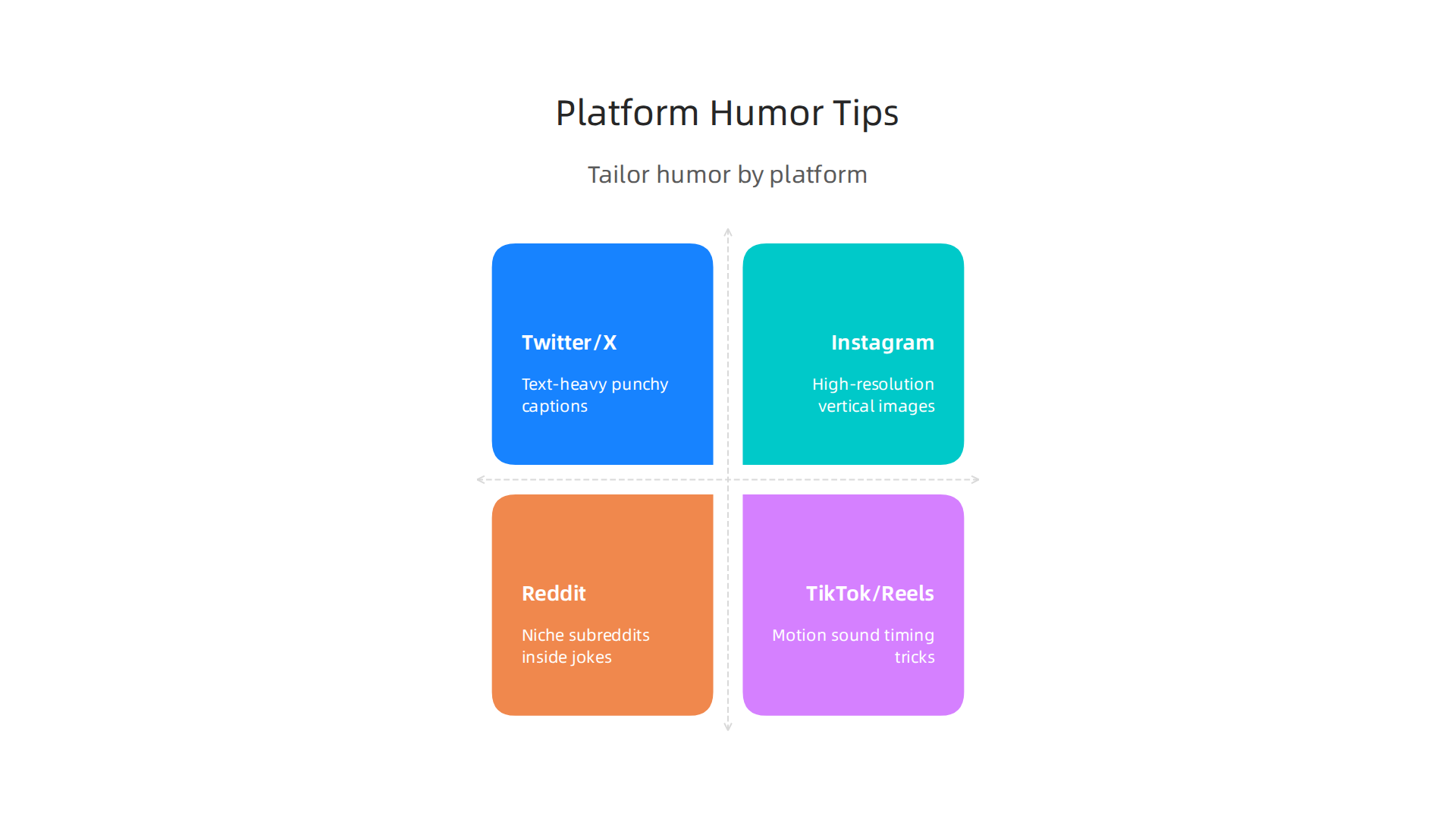
Twitter/X loves text heavy images. A funny photo with a short, punchy caption works great here. The classic "let me know meme dog" style thrives because the text does the heavy lifting. Keep your font big and your words few. Users scroll fast. They need to get the joke in one second.
Instagram wants high resolution vertical images. Quality matters. A blurry funny cat picture will not cut it. Use bright colors, clear subjects, and a vertical or square crop. Funny cats are a goldmine here. The algorithm favors polished visuals over quick jokes.
Reddit is different. Reddit is all about niche subreddits. Find the specific community that matches your humor. A joke about parenting will flop on r/funnycats but explode on r/dadjokes. Spend time lurking first. Learn the inside jokes. Then drop your funny pic with a caption that matches the tone of that subreddit.
TikTok and Instagram Reels let you go beyond static images. You can add motion, sound, and timing tricks. A slow zoom into a funny photo with a surprise audio clip works way better than a plain picture. Short form video is king in 2026. According to recent social media trend reports, video content continues to dominate attention spans. If your funny pic can become a six-second clip, do it.
The algorithms on these platforms also behave differently. Hootsuite’s 2026 social trends report shows that posting times, caption length, and even hashtag use affect reach more than ever. Test your funny photos at different hours. Experiment with captions that ask questions or tease the punchline.
If you want to see how professional funny pics adapt to each platform, check out our deep dive into funny meme pictures of dogs and the science behind the viral humor. It shows real examples that worked across multiple networks.
So do not just make one version of your funny photo. Make a version for Twitter, one for Instagram, one for Reddit, and maybe a short clip for TikTok. The same joke can go viral in different shapes. You just have to dress it for the platform.
5. The Art of the Caption
You found the perfect funny photo. The timing is right. The platform is picked. Now comes the make or break moment. The caption.
A great caption does not explain the joke. It amplifies it. Think of the caption as the second half of a comedy duo.

The image sets the scene. The caption delivers the twist. Together they create magic.
Here is the golden rule. Keep it short. Really short. A funny pic on Twitter or Instagram in 2026 needs a caption that lands in under two seconds. Long descriptions kill momentum. Aim for one to seven words max. Let me know meme dog style captions work because they invite the reader to finish the joke themselves. That participation makes the humor stickier.
Wordplay is your secret weapon. Alliteration adds a musical quality. A caption like "Pouty pooch ponders pizza" feels more polished than "Sad dog wants pizza." Rhymes work too. So do unexpected twists on common phrases. The goal is to add a layer of cleverness without sounding forced. You can learn a lot about this from our guide on good roasts, which breaks down how witty word choices create impact.
Timing is another factor. Where you place the caption changes the delivery. An overlay caption appears inside the image itself. The reader sees the words and the picture at the same exact moment. This works best for visual puns or quick setups. A comment caption appears below the image. This lets the picture speak first and the text act as a punchline follow up. Reddit and Instagram often reward this delayed delivery. Test both styles to see what fits your funny photos.
One more thing. Read your caption out loud before posting. If it sounds clunky spoken, it will read clunky on screen. Aim for natural speech. Short, punchy, and human. According to a piece from Writer’s Digest, humor hooks readers best when it feels effortless and conversational.
Do not overthink it. Your funny pic already does most of the work. The caption is just the light push it needs to go viral.
6. Satire and Parody in Visuals
Your caption skills are sharp. Your funny pic is ready. Now let us add another layer. Satire and parody can turn a simple funny photo into something people actually stop to think about.
Satire uses humor to point out problems. Politics. Pop culture. Daily frustrations. It makes you laugh, but it also makes you nod. Parody is different. It copies something familiar like a famous movie poster or a classic painting. Then it twists it into something ridiculous. Think of a funny cat Photoshopped into the Mona Lisa. The contrast creates the comedy.
According to Literary Hub, good satire tries to both entertain and offend at the same time. It tells the truth with a laugh. That balance is hard to hit. But when you do it right, your funny pics stop being just silly. They become smart. They spark conversation.
Parody often needs deep context. Your audience has to know the original source to get the joke. A let me know meme dog placed into a famous historical photo only works if people recognize the scene. That shared knowledge makes the laugh stronger. It creates a moment of connection between you and the viewer.
If you enjoy clever layered humor like this, you will love our guide on good roasts. It shows how to use wit without crossing into mean territory.
Here is the warning. Satire can backfire. If your funny photo feels too aggressive or confusing, people will scroll past fast. Or worse, they might get offended. The best approach is to punch up. Joke about powerful ideas and big trends. Avoid targeting everyday people just trying to get by.
Test your satirical funny photos on a friend before posting. If they laugh and get the message, you are golden. If they just look confused, go back and simplify the joke. Simple humor with a smart edge travels further online. And that is the whole point.
7. AI and Tools for Creating Funny Pictures
You now know how to build a joke by hand. You understand satire and parody. But what if you want to speed things up? What if your imagination runs faster than your design skills? That is where AI tools come in.
In 2026, you do not need to be a Photoshop expert to make funny pics. Generative AI models like DALL·E and Midjourney can turn a simple text prompt into a wild and surreal funny photo in seconds. You type something like "a cat wearing a top hat riding a unicycle through a library" and the tool creates it. According to Zapier, ChatGPT is the best overall AI image generator in 2026, while Midjourney leads for artistic results.

The fun part is the surprise. AI often produces unexpected details. A funny cat might end up with three ears. A background might turn into something bizarre. Those happy accidents can become the core of your joke. They make your funny photos feel fresh and weird in a way that standard memes cannot.
If you want a free starting point, starryai offers a generous free tier for generating funny AI images. You can experiment without spending a dime. Tools like CapCut also let you create funny AI images quickly for memes and social posts.
But here is the thing. Speed comes with a risk. Meme generators and template libraries make it easy to crank out funny pics fast. But if everyone uses the same template, your content starts to look like everyone else. Originality still matters. Use AI to brainstorm and build rough drafts. Then add your own twist. That is how you stand out.
You also need to think about ethics. AI can create deepfakes. It can copy the style of living artists without permission. Always ask yourself: is this respectful? Does it harm anyone? Good humor punches up, not down. And if you use AI to mimic someone else’s work, you might run into copyright trouble. Keep it original and kind.
If you enjoy this blend of creativity and humor, check out our guide on funny meme pictures of dogs and the science behind the viral humor. It shows how simple pet pics can go big with the right approach.
AI tools are powerful. But they are just the start. Your idea, your timing, and your voice are what make a funny photo truly land. Use the tech. But trust your gut.
8. Legal and Ethical Know-How
You now know how to make funny pics fast with AI. But here is the part most people skip. The legal stuff. Before you share those funny photos with the world, let’s talk about staying safe and being fair.
Copyright is real.
Just because an image is on Google does not mean it is free. This is a dangerous myth. A lot of people think images online are free to use, but that is wrong. As NYU Libraries explains, images on the open web are subject to copyright just like any other creative work. The Harvard Office of General Counsel confirms that copyright gives creators control over how others use their work.
Using a funny cat image from the web without permission could get you a takedown notice. In the worst case, you could face a lawsuit. Always ask yourself who made the original.
Fair use is not a free pass.
You might have heard of fair use. This legal rule lets you use small parts of a copyrighted work for things like commentary or parody. The U.S. Copyright Office explains the factors involved. These include the purpose of your use, how much you use, and the effect on the original work’s market.

But fair use is not automatic. It is a defense you use in court. A good resource from Social Media Examiner explains how to think about this. Transformative humor often stands a better chance. Add your own joke. Give the image a new meaning. If you can, get permission. The OpenAsset guide on image copyright recommends this approach to avoid risk.
Ethics matter too.
Even if something is legal, it might not be kind. Good comedy does not bully. It does not use harmful stereotypes. Always credit your sources when you can. This builds trust with your audience and the original creator.
Want to master witty humor that always lands well? Check out our guide on good roasts.
Knowing these rules lets you create funny pics with confidence. You can push boundaries without crossing lines. Now go make something hilarious and smart.
9. Building a Personal Collection
You have created a stack of hilarious funny pics using AI. But without a system, those gems get lost fast. Building a personal library removes the scramble.
A good collection acts like your comedy toolbox. When you need a quick laugh for a post or a reply, you have the perfect image ready. It also fuels inspiration. Flipping through your own funny photos can spark new ideas or help you spot patterns in what makes people smile.
Here is a simple way to start.
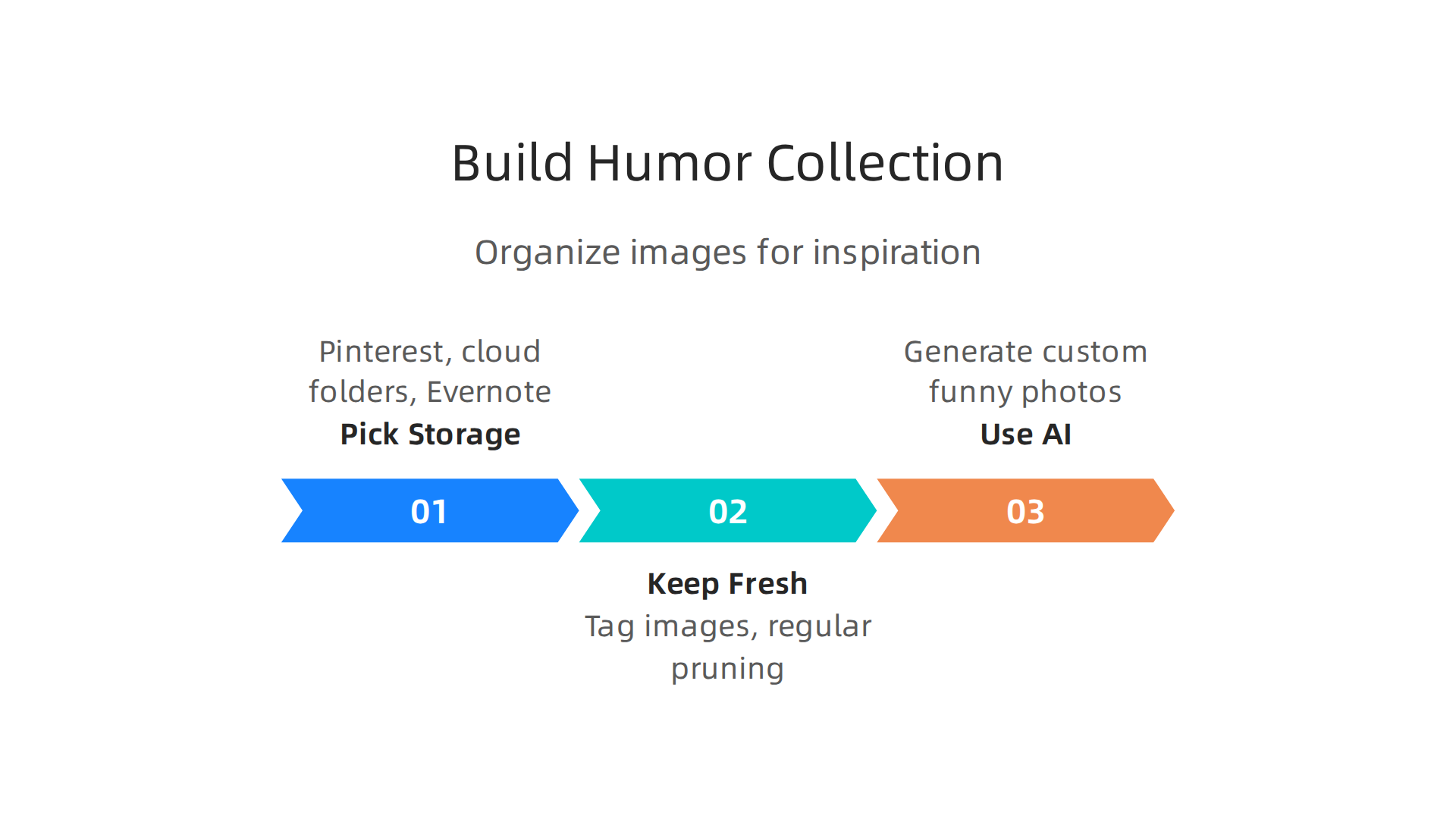
Pick your storage spot.
Many people use Pinterest to organize boards by theme. You can have boards for funny cats, relatable memes, or reaction images. Others prefer cloud folders like Google Drive or Dropbox. For power users, Evernote lets you tag images with keywords like "let me know meme dog" for instant search. Pick one tool and stick with it.
Keep it fresh and findable.
Tag every image as you save it. Use keywords that make sense to you: "Monday mood," "fail," "wholesome." This makes retrieval fast. Also set a regular pruning day once a month. Delete images that are no longer funny. Old memes lose their punch fast. A leaner collection is easier to browse.
Use AI to grow your library.
In 2026, creating your own funny pics is easier than ever. You can generate custom funny photos with tools like starryai or CapCut. For a detailed comparison of the best options, check out Zapier’s guide to the top AI image generators in 2026.
Need inspiration?
If you love animal humor, explore our deep dive on funny meme pictures of dogs and the science behind viral humor.
Start your collection today. Even twenty well-organized funny pics can save you hours and make you the funniest person in the group chat.
You have built a personal collection of funny pics. But a hidden folder does not make anyone laugh. The real magic happens when you share them. Building a community around your humor is the next step.

10. Sharing and Community Engagement
Find your people.
The internet is full of spots that love a good laugh. Humor subreddits, Discord servers, and themed Facebook groups are perfect for sharing your funny photos. If you love funny cats, there is a group for that. If your thing is the "let me know meme dog" format, you will find fans there too. Check out our deep dive on funny meme pictures of dogs and the science behind viral humor to see what makes these communities tick. Posting your work in these spaces builds real connections. People bond over shared giggles.
Sharpen your comedic eye.
Here is the thing. Posting your funny pics is only half the fun. The other half is watching how people react. Giving and receiving feedback makes you funnier. You start to see what lands and what falls flat. It helps you understand timing and relatability. To see how the pros craft a punchline, check out our guide on crafting witty insults. The same principles apply to visual humor.
Share smart and stay legal.
This is a big one in 2026. A lot of people think images online are free to use. That is not always true. Before you repost a funny pic, understand the rules. Check out this simple guide on copyright and fair use for online images. Most images found online are protected by copyright. If you want to stay safe, create your own funny pics using AI tools or stick to your personal collection from Step 9.
Go cross-platform.
Do not keep your best work in one spot. A single funny picture can work on Instagram, Twitter, and Reddit. Just tweak the caption for each platform.
Ready to dive deeper into the world of comedy writing? Explore more humor insights at Humorous Fiction.
Summary
This article is a practical, evidence-based guide to creating and sharing funny pictures that actually land online. It explains the psychological drivers behind visual humor—like incongruity, superiority, and relief—and shows how those principles map to classic formats such as image macros, reaction memes, and single-panel comics. You’ll learn how timing and pacing change a joke’s impact, which platform formats and posting tactics work best in 2026, and how to craft short captions that amplify a punchline. The guide also covers advanced moves like satire and parody, responsible use of AI image tools, and the copyright and ethical rules you must follow. Finally, it shows how to build and organize a personal image library and how to test and grow community engagement so your funny pics reach the right audience. Read this and you’ll be able to design, refine, and share visual jokes that get laughs without landing you in legal or ethical trouble.