Good Roasts The Writer’s Guide to Crafting Witty Insults That Work

Have you ever seen a comeback that made a whole room burst into laughter? A truly good roast feels like magic. But here’s the thing: it is not just an insult with a punchline. It is an art form.
A great roast relies on sharp timing and a deep understanding of the people in the room. Brain studies show that processing this kind of humor requires complex social thinking. It can bring people closer together, or it can sting if the delivery is off. That is because disparagement humor walks a fine line. Your humor style and how you use sarcasm plays a big role in whether a joke lands or flops. For every clever line from Oscar Wilde that survives for centuries, there is a poorly timed comment that ends a friendship.
Think about the best funny work memes you have seen. They spread fast because everyone recognizes the truth in them. Or consider the unexpected comedy in a dog and bounty hunter dynamic. Even a classic wag the dog scenario becomes funnier when characters use sharp, perfect roasts. The funniest moments often come from shared experience. When a roast references something everyone in the room knows, it creates an inside joke that bonds the group. This is why certain lines from comedy specials or books become legendary memes that last for years.
If you love humorous fiction, you already know this power. You want characters who trade witty banter and clever insults. You want books that make you laugh because they understand the mechanics of a good joke. A well written roast in a novel does the same thing a great meme or a classic comedy bit does. It makes you feel like you are in on the secret.
So, where do you find books that deliver this kind of smart, engaging humor? It can be tough to find funny books that actually make you laugh. Instead of sorting through endless lists online, you can find expert picks in one place.
Browse Recommendations to discover your next laugh out loud read.
The Anatomy of a Good Roast: Setup, Punchline, and the Role of Surprise
Every great roast you’ve ever laughed at follows a hidden formula. It starts with a setup that gives you context. Then comes the build-up, where tension grows. And finally, the punchline twists your expectations.
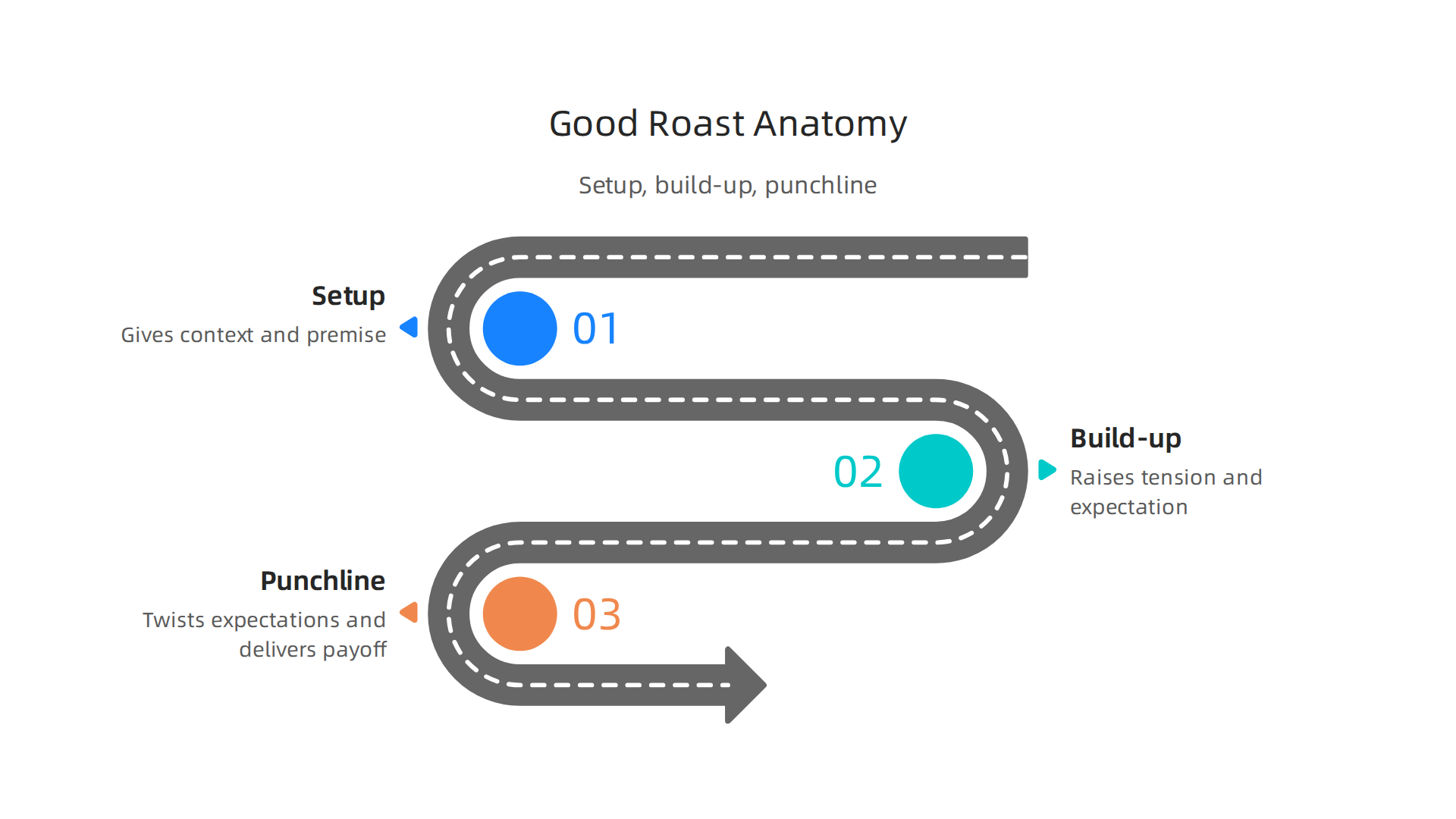
That twist is where the magic lives.
Think about Oscar Wilde’s famous line: “I am not young enough to know everything.” He gives you a normal setup, then flips it. Your brain expects one thing, but gets another. That surprise is why you laugh. Modern neuroscience shows that our brains love this kind of incongruity. How we process humor depends on our personal style, but the surprise element is universal. Research on individual differences in humor processing even shows that what surprises one person may not surprise another.
Look at the banter on The Office. When Jim says something that sounds nice, then suddenly hits Michael with a clever dig, the room cracks up. Twitter clapbacks work the same way. A user builds up a normal response, then drops an unexpected punchline. The surprise makes it shareable.
For writers, this structure is a goldmine. If you want to create good roasts in your fiction, keep this three-part pattern in mind: context, tension, twist. Master that, and your characters will feel alive.
Want to see this done right in real books? Explore humor literary magazines for curated stories that nail the roast structure.
Browse Recommendations to find your next laugh out loud read.
Timeless Roasts from Classic Literature (And What They Teach Us)
Long before Twitter clapbacks or funny work memes went viral, classic authors were already masters of the verbal takedown. And here’s the thing: their roasts still work today. They teach us that the best burns don’t need to be loud or aggressive. They rely on something much sharper: irony and understatement.
Take Shakespeare. He was the king of the backhanded compliment. When he wrote "I do desire we may be better strangers," he wasn’t just being clever. He was showing how a quiet, polite phrase can cut deeper than any shout. Lists of the best literary putdowns from Stylist show that Shakespeare’s insults often hide behind fancy words.
They wait for your brain to catch up, then hit you with the twist. That is the anatomy of a good roast.
Then you have Jane Austen. She didn’t need a raised voice. She used social commentary to burn characters with surgical precision. Her lines sound polite on the surface, but the meaning underneath stings. That is a masterclass in understatement. She proves that the most memorable roasts come from a calm, smart delivery, not from raw anger. The best literary insults collected by Penguin showcase how her wit still influences modern comedy writing today.
Oscar Wilde took it even further. He turned personal insults into universal truths. When he remarked that he had nothing to declare except his genius, he was roasting everyone else by elevating himself. His plays are full of moments where a character says something that sounds like a compliment, then flips it. Goodreads has plenty of Wilde quotes that show this pattern. The surprise in the flip is what makes us laugh.
So what do these classics teach you as a writer? First, irony beats aggression every time. Second, understatement lets the reader finish the burn in their own mind, which makes it feel more personal. Third, the best roasts feel effortless, like the character didn’t even try.
These lessons directly inform how you write good roasts in your own fiction. Whether you are creating a witty sidekick or a snarky rival, lean on subtlety. Let your reader fill in the gaps.
Want to see modern authors who still use these classic techniques? Check out the stories curated in humor literary magazines for proof that old-school roasts never go out of style.
Browse Recommendations to find your next funny read that keeps the tradition alive.
Pop Culture Roasts: From Comedy Central to Twitter Threads
So how did we get from Shakespeare and Austen to the instant clapbacks we see today? The answer lies in two big shifts: televised roasts and social media.
The modern celebrity roast really took off with events like the Comedy Central Roast of Justin Bieber in 2015. Comedians and friends piled on with sharp, scripted burns that blended truth with absurdity. These roasts set a new standard for good roasts in pop culture. They showed that even the biggest stars could be taken down a peg with a well timed joke. The format relies on the same principle those classic authors used: a calm, confident delivery makes the punchline land harder.
Then Twitter changed everything. Suddenly anyone could fire off a roast in 280 characters or less.
Social media created a whole new genre of succinct, viral burns. The best ones blend relatability with absurdity. You see this in threads like the brutal roasts from 2025 collected by Demilked, where a simple comment about Christmas or misogyny cuts deep because it points out a universal truth. Twitter roasts are fast, sharable, and often funnier than anything written for a stage.
This new breed of roast feeds directly into funny work memes and viral content. A quick burn about office life or a silly observation about a celebrity moment can rack up thousands of likes in hours. The key is the same as ever: surprise the reader. Make them laugh, then make them think.
If you want to see more examples of how these modern roasts work, check out the 180 good roasts from Parade that break down what makes a burn truly savage. Or browse the funniest roasts of 2026 for the latest viral hits.
Pop culture roasts prove that the old rules still apply. Whether you are roasting a friend over text or writing a funny scene for a book, keep it short, keep it true, and always land the twist.
Want to see how modern writers use these techniques in fiction? Then check out the stories featured in humor literary magazines for proof that a good roast never goes out of style.
Browse Recommendations to find your next hilarious read that keeps the tradition alive.
The Science of Wit: Cognitive Processing of a Good Roast
You have probably felt it. Someone delivers a perfect burn, and your brain does a little flip. Laughter, surprise, maybe a wince. That reaction is not just social. It is biological. Scientists have studied what happens inside your head when you hear a good roast, and the findings are fascinating for any writer.
When you process a witty insult, several parts of your brain light up at once. The prefrontal cortex works hard to understand the mismatch between what was said and what is true.
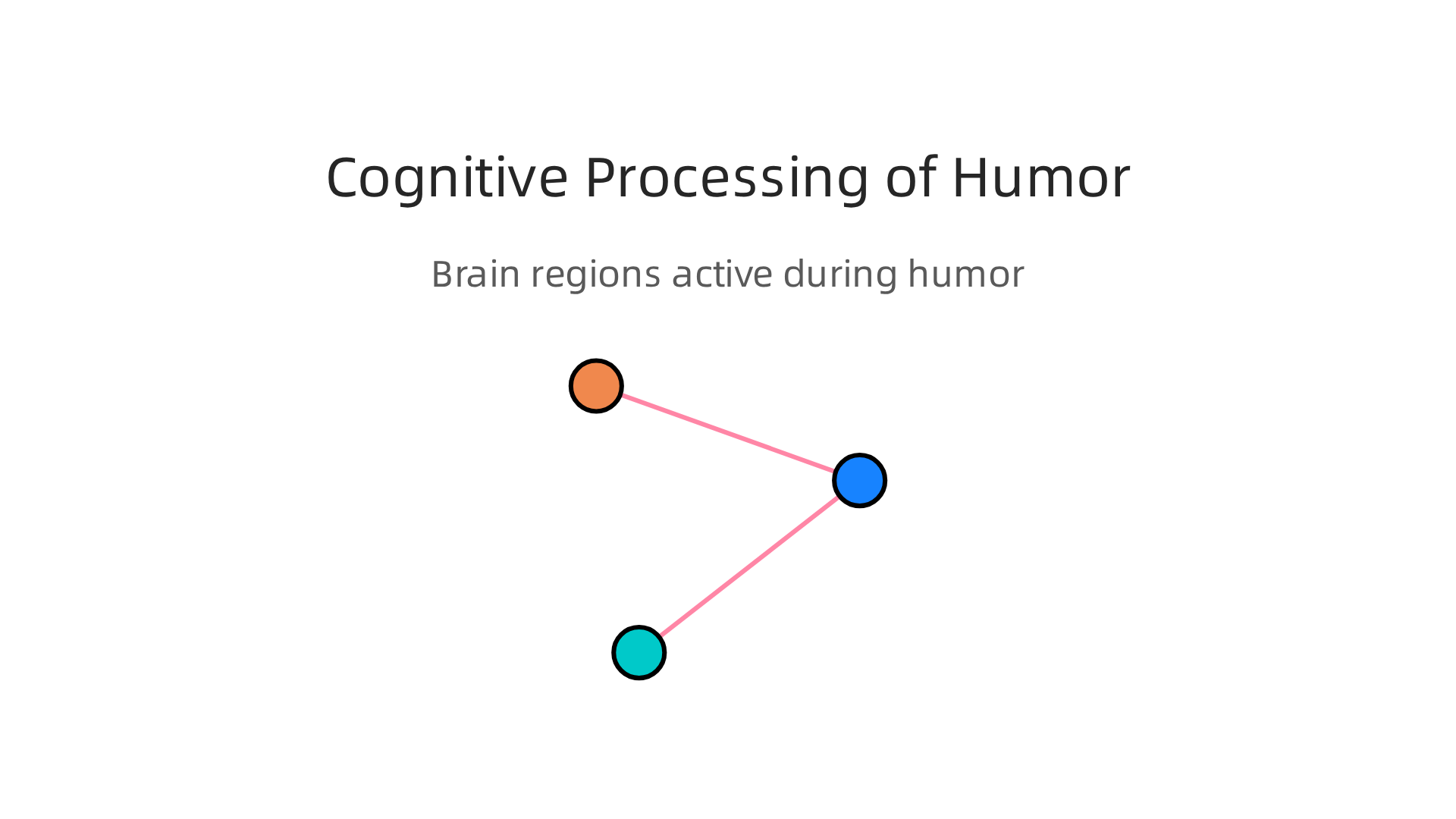
At the same time, your brain’s reward system releases a small burst of dopamine. An fMRI study on disparagement humor found that regions linked to social cognition and emotional evaluation activate strongly when we hear humor that puts someone down. Another study on joke comprehension showed that the temporoparietal and frontoparietal lobes help us grasp the twist. So a good roast is literally a brain workout wrapped in a laugh.
But here is the thing. Your brain also needs social skills to get the joke. You have to understand the speaker’s intent, the target’s feelings, and the context all at once. This is called theory of mind. Research suggests that people who use more sarcasm also tend to have a specific humor style that relies on social awareness. In other words, a roast only lands if both the speaker and the listener share enough cognitive ground.
This science matters for writers. When you craft a roast for a character or even for a funny work meme, you are tapping into these same neural circuits. Keep the setup short. Make the twist unexpected. Let the reader’s brain do the work of connecting the dots. The same cognitive rules that make a celebrity roast go viral also make a fictional insult hit hard.
Take the dog and bounty hunter comedy we see in pop culture. A character like that works because the audience understands the gap between the tough guy image and the silly reality. That gap is pure cognitive gold. You can even wag the dog a little by using a roast to distract from a bigger plot point. Science backs it up: surprise and truth create the biggest brain rewards.
Want to see how these principles come alive in a full story? Check out a book that builds entire scenes around witty exchanges.
Read Book 1 and experience a sci-fi comedy adventure where every roast is engineered to make you think and laugh.
Roasts in Film and TV: Memorable Exchanges That Define Characters
You do not have to look far to find a good roast in film and television. Some of the most quoted lines in pop culture are actually clever insults that tell you everything about a character. Think about Groucho Marx firing off, "Get out of my sight and never darken my towels again." That one line paints a picture of a quick-witted, dramatic personality. Or take the classic "You’re a wizard, Harry" from Hagrid. It is not a burn, but the context of a neglected boy suddenly learning his true identity makes it roast-adjacent in the way it shakes up the whole story.
Modern shows have turned roasts into an art form. In The Office, Michael Scott’s awkward jabs reveal his desperation for approval. Arrested Development runs on Lucille Bluth’s icy one-liners that expose family dysfunction.
And in Succession, every insult between the Roy siblings is a power move dressed as a joke. These exchanges are not just funny. They are character shortcuts. One well-placed burn can tell the audience more than a whole monologue.
Screenwriting workshops often study these moments for dialogue pacing. A quick setup, a pause, and then the punchline lands. The same rhythm works in books. If you want to see how a writer builds an entire comic scene around a perfectly timed roast, check out this look at how a bounty hunter dog comedy makes fiction funnier.
The best roasts stick with us because they feel true. According to collections of savage burns from 2025, the funniest roasts often come from real life and pop culture moments that capture a universal truth. You can find plenty of examples in lists of good roasts from Parade that show how simple words can cut deep.
Want to read fiction where the dialogue crackles with the same energy? Browse recommendations for laugh-out-loud books that master the art of the verbal jab.
How to Write a Good Roast: A Step-by-Step Framework for Fiction Writers
Now that we have seen how film and TV use roasts to define characters, let us talk about crafting your own. Writing a good roast for a story is not just about being mean. It is about being truthful in a funny way. The best burns reveal character, deepen relationships, and move the plot forward without the reader even noticing.
Here is a simple framework to help you write roasts that land.
Step 1: Start with Character Relationship
Before you write a single word, ask yourself: What is the relationship between these two characters?
A roast between best friends sounds different than a roast between rivals. Friends use affectionate teasing. Think of Chandler and Joey in Friends. Their jabs are sharp but never cruel because the love is clear. Rivals use biting insults that show tension. And strangers? Their roasts are cautious or completely off the mark.
The tone you choose sets everything else. If you get the relationship wrong, the roast feels fake.
Step 2: Use Exaggeration, Metaphor, and Callbacks
Good roasts work because they take a truth and blow it up. That is the power of exaggeration. If your character is bad at cooking, do not just say they burn toast. Say their kitchen looks like a war zone.
Metaphors make roasts memorable. Compare a character’s boring voice to a dying computer fan. It paints a picture fast.
Callbacks are gold. Reference something that happened earlier in the story. It rewards attentive readers and makes the roast feel earned. For example, if a character tried to fix a sink and flooded the kitchen in chapter three, bring it back in chapter ten. The callback tightens your story and lands a laugh.
Many professional comedy writers use these exact techniques. You can learn more about structure and timing from a comedy writing workshop that teaches professional-level joke construction.
Step 3: Test the Roast Aloud
This step matters a lot, but writers skip it all the time. Read your roast out loud. Does it flow naturally? Does it sound like something the character would actually say?
Rhythm is everything in comedy. A roast with an awkward pause or clunky wording will fall flat. When you read it aloud, you hear the beats. You notice if a word is too long or if the punchline takes too long.
Some writers even record themselves. It sounds silly but it works. You can see examples from professional comedy coaches who teach roast writing on YouTube and emphasize the natural delivery of each line.
Bringing It All Together
Writing a good roast is a skill you can develop with practice. Start with the relationship, build with exaggeration and callbacks, and test the rhythm. Your readers will thank you when they laugh out loud.
Want to see how these techniques look in a full story? Explore our book recommendations for fiction that nails character-driven humor and sharp dialogue.
Avoiding the Mean Streak: Roasts That Backfire and How to Tone Them
You have your framework. You know how to write a sharp line. But here is the thing. Even a perfectly crafted roast can crash hard if you miss the context. A roast that lands in one scene might feel cruel in another. The difference often comes down to intent and power.
Think about real life. When a boss roasts an employee, it feels different than when two friends trade jokes. One is play. The other can feel like bullying.
That is because power dynamics matter. Research on disparagement humor shows that humor that belittles someone can cause real harm, even when the speaker means no harm. The audience picks up on the imbalance.
You see this in real awards show monologues too. Some Golden Globes monologues have been widely criticized for punching down. The jokes were funny on paper, but the target could not laugh back. The audience felt uncomfortable, not amused. That is the moment a roast backfires.
So how do you keep your fictional roasts playful? Here are a few tips.
First, check the relationship. Are the characters on equal footing? If one character has more power, their roast can feel like an attack. Second, keep the teasing focused on harmless traits. Avoid sensitive topics like appearance, family, or personal trauma unless the bond is deep and the context is clear. Third, use affectionate language. A well-placed nickname or a smile can signal that the roast is love, not cruelty. For example, consider the dynamic between a dog and bounty hunter in a comedy. Their playful roasts work because the affection is obvious to the reader.
Finally, test your roasts with beta readers. Ask them how the target character feels. If they wince instead of laugh, you need to tone it down.
Want to see examples of roasts that hit the sweet spot? Browse recommendations for stories that balance sharp humor with genuine heart.
Roast Culture in Online Communities: Memes, Takedowns, and Participatory Insults
You might have noticed something strange. A perfectly timed one liner can go viral in minutes. Communities like r/rareinsults and r/murderedbywords have become gold mines for good roasts.
People share them daily, and the best posts get thousands of upvotes.
What makes these roasts so popular? They are short, clever, and often brutal. But here is the twist. They work because the audience knows the context. You are not reading a real fight. You are watching a performance. A collection of rare insults shows how specific and creative these burns can be. They feel like tiny stories. Each one asks you to laugh at the absurdity of the situation.
This culture changes what readers expect from fiction. People who enjoy funny work memes or viral takedowns want that same energy in books. They want characters who fire off quick, memorable lines. They want the satisfaction of a roast that lands without cruelty. In a way, these online communities are training grounds for modern comedy writing.
Think about the relationship between a dog and bounty hunter in a humorous story. Their playful back and forth feels familiar to anyone who has scrolled through a roast thread. The bond is clear. The insults are affectionate. The audience knows the difference.
To write good roasts for your characters, pay attention to what goes viral. Notice the structure. A strong setup. A punchy delivery. A twist that makes the reader think. Then apply the same logic to your dialogue. Keep it tight. Keep it personal. And never let it feel mean.
Want to see more examples of playful character banter? Browse recommendations for stories that balance viral style humor with real heart.
Cross‑Cultural Roasts: How Humor Travels (and When It Doesn’t)
Here is the thing about good roasts. They do not always work across borders. A killer one liner that kills in London might get blank stares in Tokyo. Why? Because humor is deeply tied to culture.
Take British sarcasm versus American directness. British roasts tend to be subtle, dry, and layered with hidden meaning. American roasts are more obvious and upfront. A cross-cultural comparison shows these styles reflect different communication norms. While irony works well in England, it lands less effectively in countries like Germany or the Netherlands, where directness is valued more.
Now think about Japanese enryo, the cultural practice of restraint and modesty. A roast that feels playful in Berlin might feel rude in Osaka. Humor is not only contextual. It is cultural too. Mexicans might laugh at death, while the French enjoy watching the world go by. This is why studies on cultural humor perception matter for writers.
Roasts that lean heavily on pop culture references are especially risky. If your audience does not know the show, the meme, or the celebrity, the joke falls flat. Cross-cultural humor struggles when it relies on local inside knowledge.
So how do you write good roasts that travel? Look at authors like Terry Pratchett and P.G. Wodehouse. They blend universal wit with local flavor. Their humor comes from character and situation, not from references that expire. Think about the natural comedy in a dog and bounty hunter dynamic. The humor is built on relationship, not culture.
Want to explore more examples of humor that crosses borders? Browse recommendations for stories that prove laughter can travel when you write it right.
Curating Your Reading List: Novels Packed with Witty Exchanges and Good Roasts
So you want to read more good roasts in book form? The good news is that some of the best comedic writing lives in novels and plays where every line is a verbal sparring match. The trick is knowing where to look.
Start with classics that are basically nonstop clever put-downs. Oscar Wilde’s The Importance of Being Earnest is a masterclass in polite insults wrapped in Victorian manners. Joseph Heller’s Catch-22 takes military absurdity and turns it into a series of deadpan, devastating comebacks. Then you have modern gems like Good Omens by Neil Gaiman and Terry Pratchett, where an angel and a demon roast each other across centuries. Jasper Fforde’s The Eyre Affair blends literary references with quick dialogue that keeps you grinning.
How can you tell when a roast is well-written? Look for subtext. A great roast does not just call someone dumb. It says something that sounds nice on the surface but carries a second, sharper meaning underneath. Pay attention to callbacks too. When a character references an earlier line or event, it shows the writer planned the humor carefully. The best good roasts rely on layered meanings, not just direct insults.
For a long list of memorable literary put-downs, check out collections from Stylist and Shortlist. You will see how authors from Shakespeare to Dickens built burns that still land today. Another helpful resource is Goodreads quotes tagged "classic insult," where readers share their favorite sharp lines.
If you want to see how real-world personalities create comedy through unexpected relationships, read about the bounty hunter dog dynamic and what writers can learn from it.
Ready to fill your reading list with more witty exchanges? Browse recommendations for curated picks that will keep you laughing.
Summary
This article explores the art of the good roast—what makes a biting one-liner land, why it matters in fiction and pop culture, and how writers can craft roasts that are funny without being cruel. It breaks down the classic three-part structure (setup, tension, twist), shows how authors from Shakespeare to Wilde perfected understatement and irony, and traces modern roasting from televised celebrity roasts to viral Twitter clapbacks. The piece also summarizes cognitive research explaining why surprise and social context trigger laughter, and gives a practical framework for writers: define relationships, use exaggeration/metaphor/callbacks, and test delivery aloud. It warns about power dynamics and when roasts cross into bullying, offers cross-cultural cautions, and points readers to humor magazines and curated reading lists for examples. After reading, you’ll understand the mechanics of a good roast, be able to write sharper character banter, and know how to test and temper jokes so they land for your audience.