Why We Find Things Funny The Art and Psychology Behind Every Joke

The Art and Science of Humour: Why Do We Find Things Funny?
We all love to laugh. A good joke can turn a bad day around.

A funny scene in a book can make you snort on the bus. But have you ever stopped to wonder what actually makes something funny? Why do some people find a silly funny face hilarious while others just shrug? And why can a story about funny animals make us laugh out loud one moment and leave us cold the next?
The truth is, humour is a universal human experience. Every culture on earth shares laughter. But at the same time, it is deeply personal. What cracks one person up can feel flat to another. That puzzle is what makes humour so fascinating.
Researchers have spent decades trying to crack the code. According to experts, most funny moments fall into a few major theories. These include the relief theory, the superiority theory, and the incongruity theory. The Bucknell Digital Commons explains these as the three traditional ideas behind why we laugh.

The relief theory says we laugh when we release built-up tension. The superiority theory says we laugh when we feel a little smarter or better off than someone else. And the incongruity theory says we laugh when something unexpected or mismatched happens.
All of this matters because understanding the "science" behind a laugh helps you appreciate the "art" of it more. When you know why a certain joke works, you can find better humour in the books and stories you read. You can also spot the clever tricks writers use to make you chuckle.
This article will walk you through the psychology, the structure, and the cultural side of humour. We will look at how funny faces and funny animals tap into our brains. We will even touch on how podcast jokes use the same ancient rules. By the end, you will have a whole new toolkit for discovering and enjoying comedic fiction.
If you are ready to find your next big laugh in literature, you have come to the right place. Looking for Humorous Fiction? The Ridiculous brings absurd comedy into a full sci-fi story world for readers who love to laugh.
The Psychology of Humour: Why We Laugh
So we have established that humour is a mix of science and art. Now let us dig into the psychology behind it. Why does your brain decide something is funny in the first place? And why do funny faces sometimes land better than a clever pun?
The three classic theories help explain this. According to the Bucknell Digital Commons, these are the superiority theory, the relief theory, and the incongruity theory.
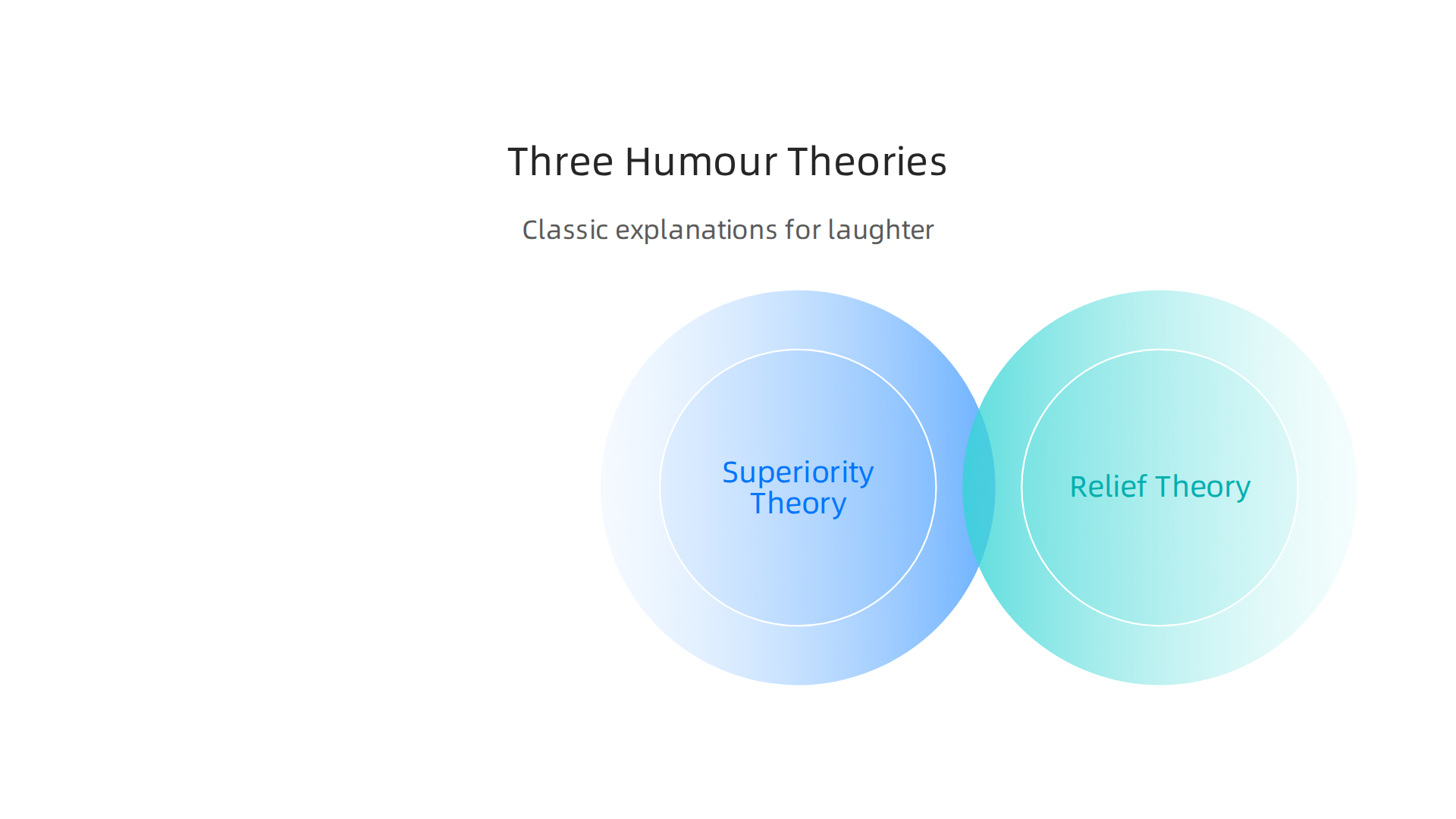
Each one taps into a different part of how we think.
Superiority theory says we laugh when we feel a little better than someone else. Think about a video of someone tripping over a funny face they made right before falling. You laugh because you are safe and they are not. It sounds mean, but it is a very old instinct. The Internet Encyclopedia of Philosophy notes this idea goes back to Plato and Aristotle.
Relief theory is about tension and release. Imagine a suspenseful scene in a book. The hero is about to get caught. Then a cat knocks over a lamp, and the villain jumps. You exhale and laugh. That is relief. Roxanna Elden explains that this theory works well in comedy sketches and podcast jokes where the host builds pressure and then releases it with a punchline.
Incongruity theory is the most common in written humour. It says we laugh when something unexpected or mismatched happens. A funny animal wearing a tiny hat is incongruous. A serious king suddenly breaking into a silly dance is incongruous. Your brain expects one thing and gets another. That surprise creates laughter.
Now here is where it gets really interesting. Modern neuroscience shows that these three theories are not just ideas. They actually light up different parts of your brain. When you "get" a joke, your reward center activates. This is the same part that fires when you eat chocolate or win a game. That is why a good laugh feels so satisfying.

But written humour is special. It requires you to be an active participant. You have to read the words, imagine the scene, and make the connection yourself. That is much harder than watching a funny face in a video. The cognitive shift happens in your mind alone. When you connect the dots, your brain rewards you with a laugh.
This is why finding books that match your sense of humour matters so much. A joke that works on paper might feel flat on screen, and vice versa. Understanding these psychological triggers helps you choose stories that will keep you laughing.
If you want to explore how funny faces and visual cues trigger laughter in fiction, check out this guide on how funny images for people spark better humorous writing. It shows how the same psychological rules apply to words on a page.
Ready to find a book that uses all three theories at once? Looking for Humorous Fiction? The Ridiculous brings absurd comedy into a full sci-fi story world for readers who love to laugh.
The Anatomy of a Joke: Key Components of Funny Expressions
Ever read a joke that fell flat on the page but would have killed in conversation? That is the difference between knowing the parts of a joke and actually using them right. Every funny expression, whether it is a funny face in a cartoon or a clever twist in a novel, relies on the same basic skeleton.
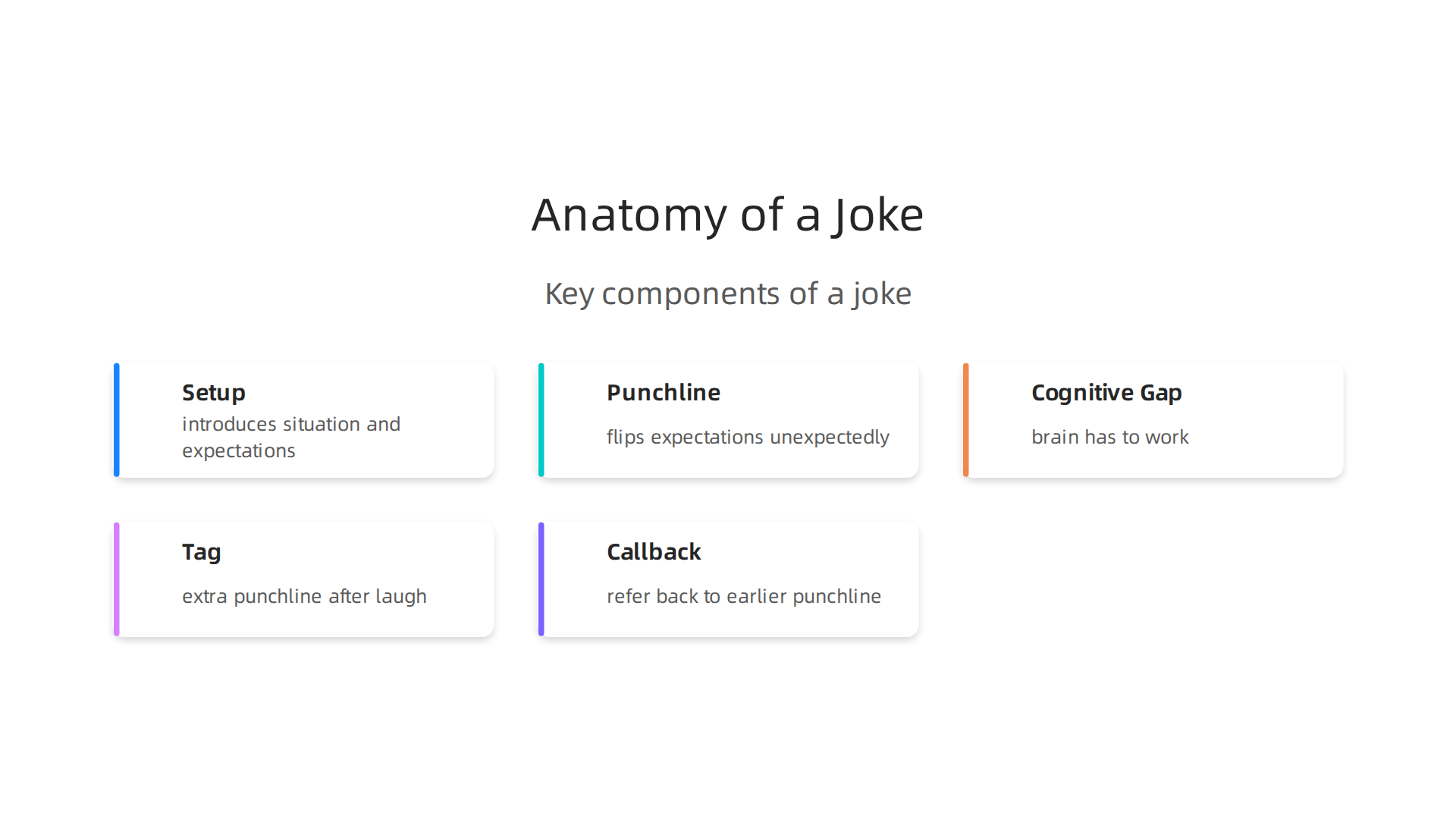
Every joke has a setup, a punchline, and a cognitive gap. The setup introduces the situation and sets your expectations. The punchline flips those expectations. The gap is the little space between them where your brain has to work.
You have to bridge that gap yourself. That is where the laugh comes from.
According to Mint Comedy, the classic three parts are the setup, the punchline, and the tag. A tag is an extra punchline that lands after the first laugh. Some jokes also have a callback, which is when you refer back to an earlier punchline later in the story.
The Backstage guide explains that the setup needs to be clear and concise. It should create a specific expectation. The punchline then breaks that expectation in a surprising way. The Toastmasters International article adds that misdirection is key. You lead the reader down one path and then yank them onto another.
Timing matters too, even in written comedy. In a book, timing comes from sentence length and paragraph breaks. A short, punchy sentence after a long descriptive passage creates a rhythm. Wordplay like puns, irony, and satire are core tools for written humour. They let you twist meanings without relying on a performer’s delivery.
Exaggeration is another big one. Think about funny animals in fiction. A dog that steals a spaceship and then pretends to be innocent is funny because the behaviour is blown way out of proportion. Callbacks work well in serialized fiction or podcast jokes where the audience remembers an earlier bit.
If you want to see how these components play out in visual humor, check out this guide on how funny images for people spark better humorous writing. It shows how the same setup-punchline structure applies to both words and pictures.
When you understand the anatomy, you can spot the difference between a lazy joke and a crafted one. A good written joke uses misdirection, exaggeration, and callbacks to keep the reader engaged. It respects the cognitive gap and trusts the reader to connect the dots.
Ready to see these components in action? Try Funny Fiction With Scope. A sci-fi comedy adventure built for witty, curious readers.
Cultural and Linguistic Nuances in Humour
Have you ever told a joke that killed at home but got blank stares abroad? That is not a bad joke. That is culture at work. What people find hilarious depends on shared history, language quirks, and social rules. Understanding these differences can save your humour from falling flat.
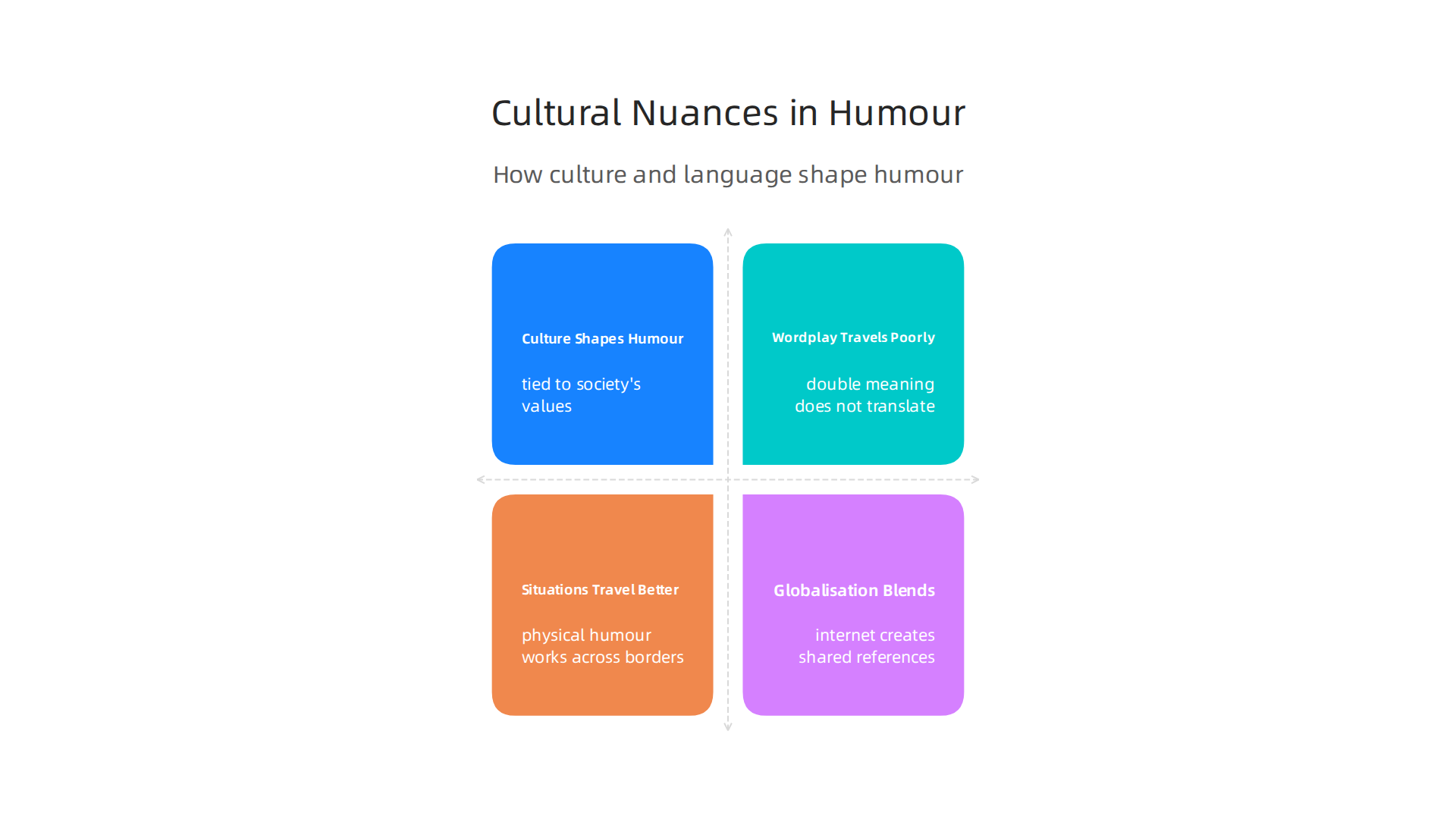
Why culture shapes what we laugh at
Humour is deeply tied to a society’s values and norms. According to Psychology Today, Canadians often see ordinary people as funny, while Chinese audiences tend to view humour as a talent reserved for experts.

That difference changes how you write a joke. If you are writing for a global audience, you need to know who you are talking to.
National Training explains that humour reflects each society’s language, traditions, and shared experiences. What is hilarious in Mexico, where people laugh at death, might puzzle someone in France, where watching the world go by is the punchline (as Imagine5 notes). These are not just quirks. They are the building blocks of comedy in different places.
Wordplay travels poorly; situations travel better
Puns and wordplay are fun but tricky. A pun that works in English often falls apart in another language. The double meaning just does not translate. That is why podcast jokes that rely on clever wordplay might flop internationally. On the other hand, physical humour and universal situations work across borders. A study from OhioLINK found that funny faces, awkward situations, and dark humour can cross cultures easily. Think about a character tripping over a rug. You do not need to speak the language to get that joke.
Globalisation is blending humour
Here is the good news. The internet is creating new shared humour references. Memes, viral videos, and streaming shows are mixing cultures.

Funny animals like dogs doing silly tricks get millions of laughs worldwide. The same goes for podcast jokes that spread across borders. Audiences today are more exposed to different types of comedy than ever before. That means you can borrow elements from other cultures and still land the punchline.
If you want to see how visual humour crosses cultures, check out this guide on how funny images for people spark better humorous writing. It shows how a well-timed image can work in any language.
The key takeaway? Know your audience. If you are writing for a global crowd, lean on universal situations and physical comedy. If you are writing for a specific culture, you can play with wordplay and inside jokes.
Ready to explore a world where humour knows no boundaries? Looking for Humorous Fiction? The Ridiculous brings absurd comedy into a full sci-fi story world built for readers who love a good laugh.
Subjective vs. Universal Humour: What Tickles Different Audiences
Even within the same culture, you and your best friend might not laugh at the same jokes. That is because your sense of humour is just as personal as your taste in music or food. Two big things shape what you find funny: your personality and your life experiences.
Here is a simple breakdown of what is at play.
Personality shapes your humour style
Research shows that personality traits like openness and extraversion strongly influence what makes you laugh. People who are open to new experiences tend to enjoy absurd and surreal humour more. Extraverts often prefer lively, social comedy. A 2026 dataset from Mendeley Data explores exactly how different comedic humour styles connect to personality traits. The bottom line is that your brain is wired to find certain types of humour funnier than others.
Some people love funny faces and physical comedy. Others prefer clever wordplay or witty put-downs. Neither is right or wrong. They are just different humour profiles.
Broad appeal vs. polarizing topics
Certain types of humour have almost universal appeal. Absurdity and wordplay work for a wide range of people. Think about a silly podcast joke about a talking squirrel. Most audiences will chuckle because the setup is simple and the punchline is clean.
But other topics split the room. Dark humour and satire polarize audiences. A 2018 study from OhioLINK showed that dark humour can cross between cultures, but it also risks alienating people who find it too harsh. According to a 2025 YouGov report, heavy comedy consumers in the US are more likely to be neurodivergent, single, or part of the LGBTQIA+ community. That tells us that life experience changes how you relate to edgier humour.
Life experience changes your laugh
Your age and gender also play a role. A 2024 statistical study found that your sense of humour shifts over time. What seems hilarious at 20 might feel tired at 50. And according to a 2015 replication study, men often prefer women who laugh at their jokes, while women prefer men who make them laugh. These patterns are not absolutes, but they show how funny animals and funny faces might land differently depending on your audience.
Use your humour profile to find better fiction
Here is the real payoff. When you understand your own humour profile, you can find fiction that consistently delivers laughs.

If you know you love absurdity, you can skip the dry satire. If you prefer gentle wordplay, you can avoid dark comedy.
Want to test this idea with a read that plays with personality-driven humour? Check out Make Your Next Novel Ridiculous. It is a series where humour, identity, and cosmic chaos collide, perfect for readers who love the unexpected.
And if you are curious how visual humour crosses boundaries, read this guide on how funny images for people spark better humorous writing. It shows how a well-timed joke can work anywhere.
How to Discover High-Quality Humorous Fiction (and Avoid Wasted Time)
You now know your humour style. You know whether you love absurd wordplay or witty satire. But here is the real struggle: finding a funny book that actually delivers.
Let’s be honest. The sheer number of books out there is overwhelming. Every year, thousands of new titles hit the shelves. Many claim to be hilarious but fall flat. A reader on one forum summed it up perfectly: "Funny books are impossible to find, or funny books don’t like me." That frustration is real. So how do you skip the duds and find the gold?
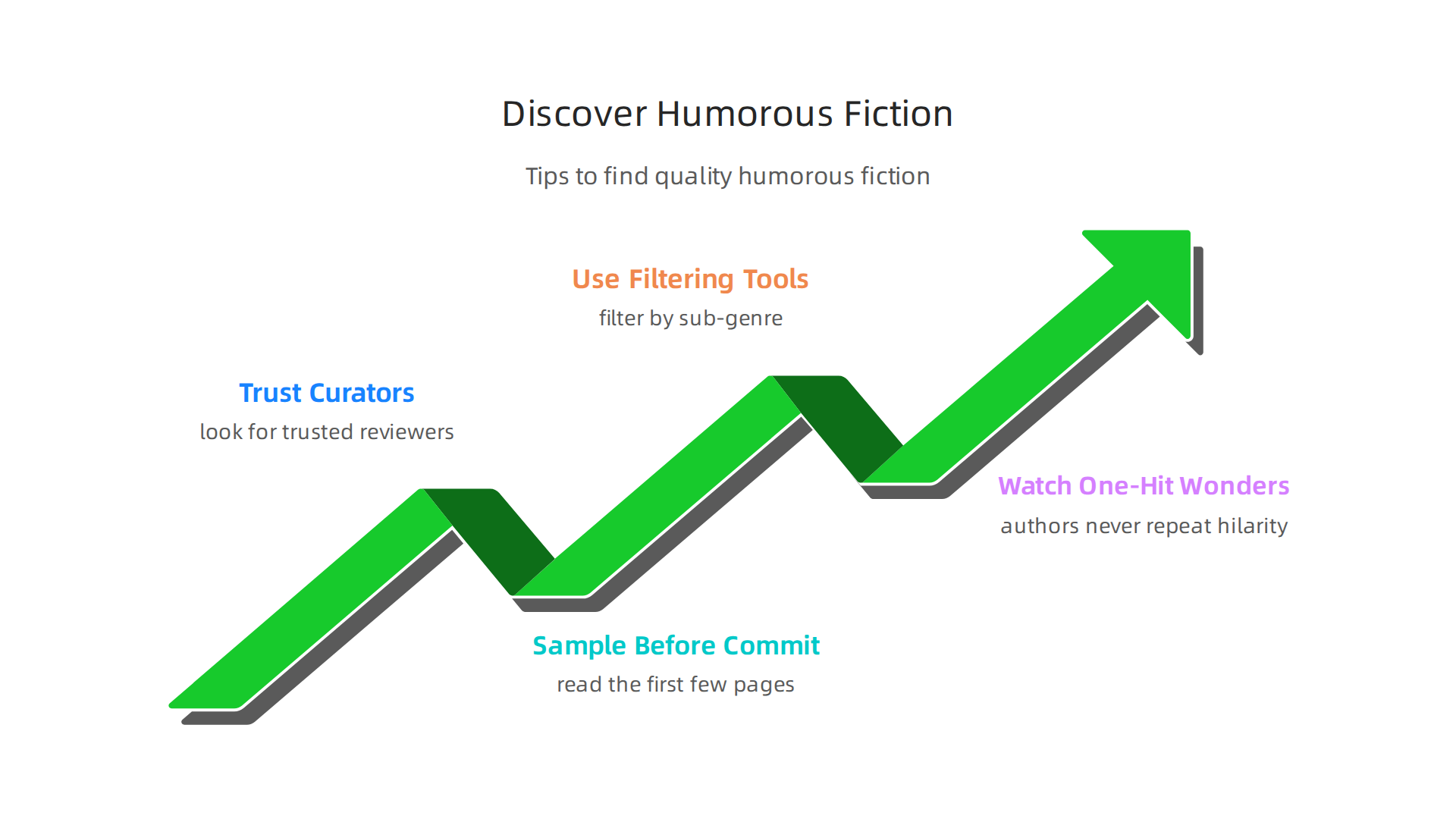
Trust the right curators
When you walk into a bookstore, you trust the staff picks. Online, you need the same thing. Look for trusted reviewers who specialize in humour. Sites like Literary Hub and Modern Mrs Darcy regularly publish lists of funny books that have been vetted by real readers.

These aren’t random algorithms. They are human-curated recommendations.
You can also join genre-specific communities. On Reddit, look for subreddits like r/booksuggestions or r/humor. On Goodreads, follow lists like "Funny Books" or "Sci-Fi Comedy." The key is to find people who share your taste in humour. If you love dry wit, find a reviewer who hates slapstick. Their bad review might be your perfect match.
Sample before you commit
Books are a time investment. So why commit to a full novel without testing the waters? Most online retailers let you read a sample. Use that feature. Read the first few pages. Does the tone match what you expect? Is the humour consistent?
Another trick: look for authors who have built a career around your preferred style. If you love absurd comedy, check out writers like Christopher Moore or Douglas Adams. If you prefer witty satire, try authors like Nick Hornby or David Sedaris. These are specialists. They know their lane and they stick to it. That consistency is your best bet for a satisfying read.
Use filtering tools to cut the noise
General book platforms are terrible at sorting humour. When you search "funny books" on Amazon, you get everything from children’s picture books to dark thrillers. That is useless.
Instead, use platforms that let you filter by sub-genre. Sites like LibraryThing and Goodreads have detailed tags. You can search for "science fiction comedy" or "paranormal romance humor." Narrowing your search reduces the noise and increases your odds.
If you are in the mood for something specific, say a podcast joke style story or a book with funny animals, there are dedicated resources. For example, Humorous Fiction explains why literary magazines are a gold standard for funny books. They often feature short works from emerging comedic writers.
Watch out for one-hit wonders
Some authors write one hilarious book and never repeat it. That is fine, but don’t expect their second book to be as good. Instead, seek out authors who have a body of work in the same tone. A 2026 study from YouGov shows that heavy comedy consumers often have very specific tastes. You are better off following a consistent author than gambling on a one-off.
Your next laugh is closer than you think
Finding high-quality humorous fiction does not have to be a chore. Start with curated lists. Sample before you buy. Filter by sub-genre. And stick with authors who know their craft.
If you are ready for a series that delivers absurd comedy with a sci-fi twist, check out Make Your Next Novel Ridiculous. It is built for readers who love unexpected jokes and cosmic chaos. You can also explore The Ridiculous for a full story world designed to keep you laughing.
And if you want to understand why some visual humour goes viral while others flop, read this guide on why funny pictures of people make us laugh out loud. It connects perfectly to finding the right books for your sense of fun.
Your time is precious. Use these tips to discover books that actually make you laugh.
Summary
This article explores why we find things funny by combining classic humour theories with modern neuroscience and writing craft. It explains the three traditional ideas—superiority, relief and incongruity—and shows how each lights up different parts of the brain, why written jokes rely on the reader’s mental work, and how visual cues like funny faces or animals trigger laughs. You’ll learn the anatomy of a joke—setup, punchline, tag and callbacks—plus practical timing and wordplay tips for written comedy. The piece also covers cultural and personality differences that make humour subjective, and gives concrete strategies for finding books that really make you laugh, including trusted curators, sampling tactics, and filtering tools. By the end you’ll understand why some jokes land and others don’t, and you’ll have clear steps to discover humorous fiction that matches your taste.