Why Funny Pictures of People Make Us Laugh Out Loud

Why a Single Image Can Make Us Laugh Out Loud
Have you ever been scrolling through your phone and stopped cold on a funny picture of a person? The timing is perfect. The expression is priceless. And before you know it, you are laughing out loud.

It happens to all of us. But why does a single funny image of people hit us so hard? The answer is rooted in how our brains process surprise and play.
Scientists who study the psychology of humor have found that visual comedy works because it creates a sudden twist in what we expect. The play-mirth theory of humor explains that laughter happens when we perceive a playful turn in a situation. That split second where a funny image of people breaks the pattern of normal life triggers a joyful reaction. And it does not matter whether you speak the same language as the person in the photo. A well timed funny picture about people can make anyone laugh.
This is why absurdist humor is so effective in visual form. A person wearing a ridiculous hat in a serious setting. Two strangers making the exact same face at the exact same moment. These moments skip over words and go straight to our funny bone. Even young children, as early as two years old, can detect humor in images before they fully understand language. That is how universal this kind of comedy really is.
But here is the thing: understanding why funny pictures about people work is not just interesting trivia. It can actually help you become a better writer. Comedic writers study visual humor to learn how to build the same surprise and delight into their stories. If you want to understand more about what makes these images tick, check out our article on visual humor and viral photos.
This understanding is powerful for writers who want to inject that same punch into their work. If you are looking for humorous fiction that captures that same absurdist spirit, check out The Ridiculous. It brings absurd comedy into a full sci-fi story world. Because sometimes the best laughs come from the most unexpected places.
The Psychology Behind Why We Laugh at Funny Pictures
So we know that a sudden twist in what we expect can make us crack up. But why exactly does that happen? Psychologists have spent decades studying this question. And they have landed on three major theories that explain why funny pictures of persons make us laugh.
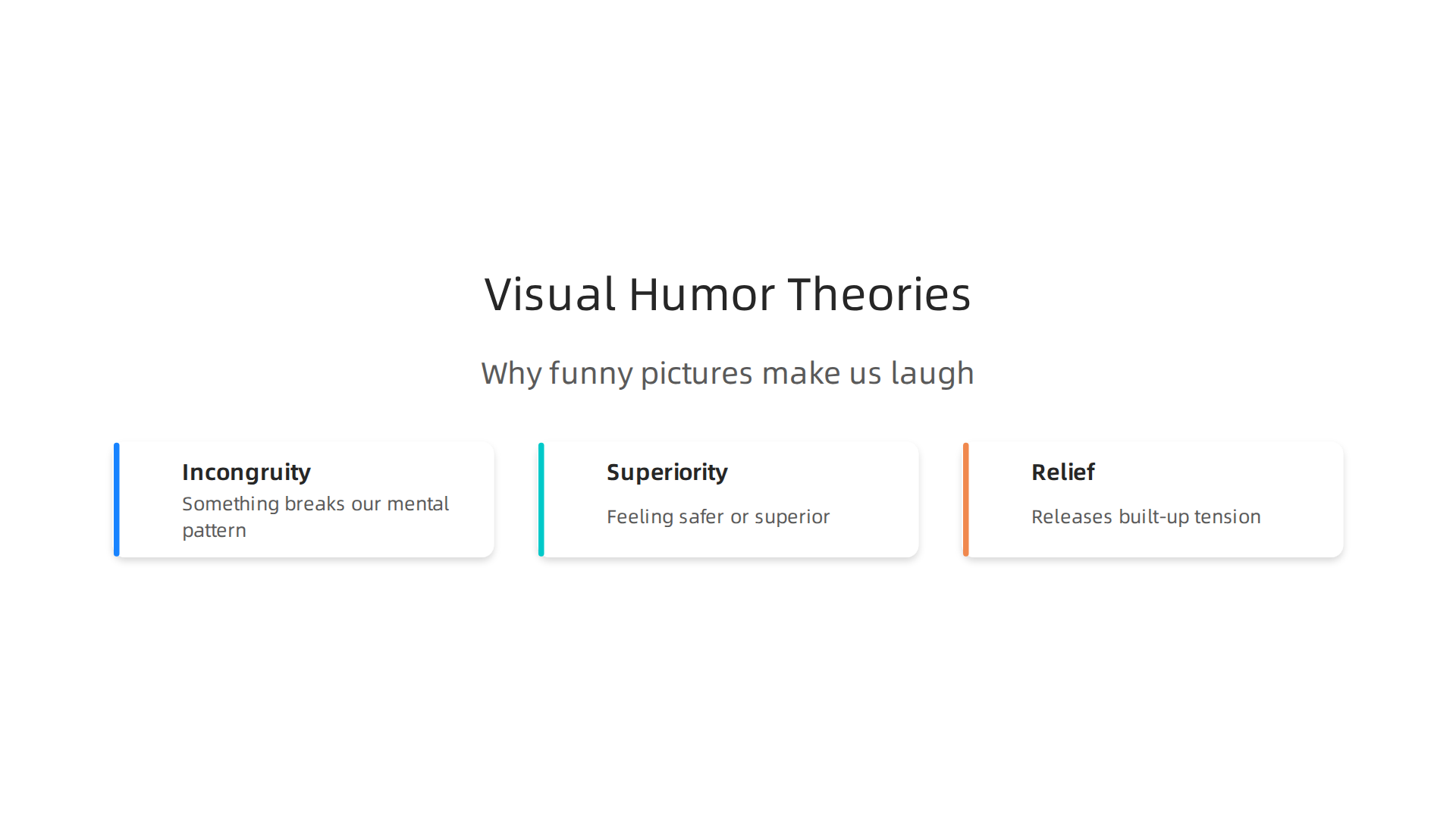
These ideas come from the study of humor in psychology, and they are surprisingly simple.
The first is called incongruity theory. This one says we laugh when something breaks our mental pattern. Imagine you see a funny image of people where a serious judge is wearing a clown wig. Your brain expects a stern face and a robe. Instead, you get a bright red wig and a big fake nose. That mismatch between what you expect and what you see creates a moment of surprise. And that surprise is what triggers a laugh. Researchers explain that this kind of unexpected twist is central to visual humor. In fact, a study on how we detect humor in images found that even very young children respond to this kind of surprise.
The second theory is superiority theory. It sounds harsh, but it is really about safety. We laugh at someone else’s small misfortune because we feel better or safer than them. Think about a funny picture about people where a man slips on a banana peel and lands in a pile of leaves. You are not laughing because you are mean. You are laughing because you are safe. You are not the one falling. This theory goes back thousands of years.

Philosophers like Plato and Aristotle noticed that we often find humor in the clumsiness or mistakes of others as long as no one is truly hurt. It is a way our brains feel relief that we are okay.
And that leads to the third theory: relief theory. This one says that laughter releases built-up tension. When you see a stressful or awkward situation in a funny images about people, your brain builds up a little nervous energy. The laugh lets that energy out. For example, a photo of someone getting splashed by a puddle while wearing a suit might make you tense up for a split second. Then you realize it is funny, and you let out a laugh. Studies have even shown that comedy can help people cope with scary or stressful images. It is like a pressure valve for your emotions.
So the next time you scroll past a hilarious funny pictures about people, remember that your brain is doing some serious work. It is spotting the surprise, feeling safe, and releasing tension all at once. If you want to use these same tricks in your own writing, take a look at how absurdist humor builds on incongruity. You can learn more in our article on why some funny photos go viral and others flop.
Understanding these theories is a powerful tool for any writer. It helps you craft scenes that make readers laugh on cue. If you are ready to put that knowledge into practice, check out the humorous fiction in The Ridiculous. It uses all three theories to keep you laughing from start to finish. Because the best laughs come from knowing exactly why something is funny.
Anatomy of a Visual Gag: Timing, Exaggeration, and Surprise
Now that you understand the psychology behind why we laugh, let’s look at how photographers and creators actually build those laughs. The best funny pictures of persons don’t happen by accident. They use three specific tools: physical exaggeration, the element of surprise, and perfect timing.
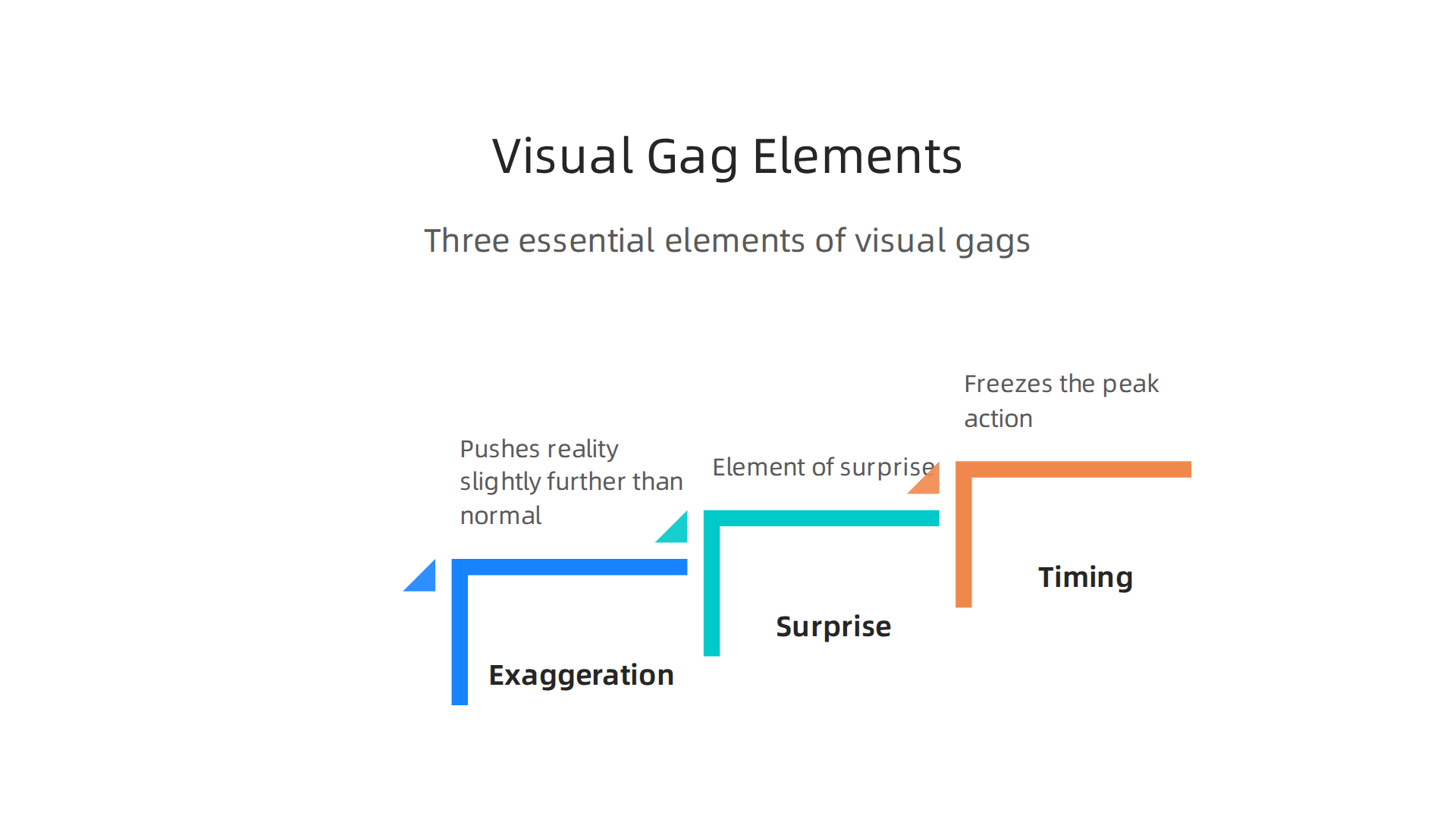
These are the building blocks of a great visual gag.
Think about a funny image of people where someone has an impossibly oversized hat or a ridiculously stretched expression. That is physical exaggeration at work. It makes the person look cartoonish, even if the photo is real. Exaggeration works because it tricks your brain into seeing something familiar in an unfamiliar way. As one photography expert explains, humor often comes from pushing reality just a little bit further than normal. A slight exaggeration feels funny. A huge one feels absurd. And absurdist humor is one of the most reliable ways to get a laugh.
The second ingredient is surprise. The best funny images about people catch a moment you did not see coming. A child making a silly face right as the camera clicks. A dog stealing a sandwich from its owner’s hand mid-bite. Professional photographers know that the most hilarious shots come from being ready when the unexpected happens. One tip from experienced photographers is to keep your camera on and watch for those split-second moments. The element of surprise triggers your brain’s incongruity response, which we talked about earlier. It is the same mechanism that makes a punchline work.
The third piece is timing. In a still photo, timing is everything. You cannot show motion directly, but you can freeze the peak action. Think about a funny pictures about people where someone is mid-sneeze or just about to trip. That frozen moment tells the whole story. Photographers call this capturing the decisive instant. If you want to get better at it, learning about composition rules can help. Understanding how to frame a scene and predict where the action will go is a skill you can practice.
When all three of these elements come together physical exaggeration, surprise, and timing you get a visual gag that hits hard. The Ridiculous uses these same techniques in its storytelling. It blends absurd moments with surprising twists and perfect pacing to keep you laughing. If you want to see how professionals apply these principles in a full story, Looking for Humorous Fiction? is a great place to start.

The Role of Context and Shared Cultural References
Have you ever shown a friend a photo you thought was absolutely hilarious, only to get a blank stare in return? That happens because humor is not universal.

A funny picture of persons might make you laugh in one country but mean nothing in another. Context and shared cultural references play a huge role in whether an image lands or flops.
Think about it. A picture of someone standing alone at a bus stop holding an umbrella on a sunny day might be funny if you know that the bus in that town never comes on time. Without that context, it is just a person with an umbrella. The same funny image of people can feel neutral or hilarious depending on what the viewer already knows. As one psychology study explains, culture shapes how we perceive humor in deep ways. What is considered witty in one culture might be confusing in another. This is especially true for visual humor because there are no words to explain the joke.
The location or activity in a photo can also flip the tone. A funny images about people at a formal event, like a wedding, becomes comedic when someone trips while dancing. But that same fall at a sports game might feel normal. Context changes everything. Professional photographers who want to capture humor know they need to think about their audience. One photography expert notes that humor often comes from juxtaposition or unexpected situations that rely on the viewer’s background knowledge.
Shared cultural references are another big piece. Inside jokes, memes, and regional stereotypes can make a photo go viral in one community but leave outsiders cold. For example, a picture referencing a famous local news event will only work for people who saw that story. Research on cultural differences in humor shows that Western audiences often prefer slapstick and exaggeration, while Eastern audiences may appreciate wordplay or subtle social commentary more. So a funny pictures about people that relies on a political joke might work in one country but fall flat in another.
This is why the best funny content creators pay attention to their audience’s world. They ask: Who will see this? What do they already know? What will surprise them? If you want to dive deeper into how different cultures use humor in storytelling, you might enjoy exploring how absurdist humor plays out across genres. Understanding these nuances can make your own photography or writing much stronger. After all, the funniest moments connect with something we all share, even if we come from different places.
Funny Pictures in the Digital Age: Memes and Virality
You have probably scrolled past a hundred funny pictures of persons today without even thinking twice. Some made you smile. Most did not. But a few probably stopped you cold and made you hit share. Why? Because memes have become the modern engine for visual humor. A single funny image of people can travel across the world in hours, get remixed a thousand times, and become part of internet history.

Memes are basically the digital evolution of the inside joke. They take a funny images about people and add a layer of text or a new twist that makes it relatable to a huge audience. The best memes feel like they were made just for you, even though millions of people see them. That is the magic. And according to a look at viral moments from 2025, three things drive this: perfect timing, genuine authenticity, and effortless shareability. A picture that lands at the right moment with the right caption can explode.
So what makes a funny pictures about people go viral in 2026? Relatability is huge. If the image shows a situation everyone has experienced, like tripping over a curb or reacting to bad news, it spreads fast. Shareability matters too. Platforms like Instagram, TikTok, and X reward content that gets people to tag their friends.


And algorithms push content that gets early engagement. Research from the University of Chicago even suggests that memorable images are more likely to go viral than emotional ones. So a funny photo that sticks in your brain has a better chance of taking off.
The lifecycle of a viral funny image of people is pretty predictable. It starts with an original photo, often an accidental moment or a candid shot. Someone adds a clever caption. The meme spreads to a community, then jumps to the mainstream. People remix it with new captions. It peaks, then fades. By the time you see it on a news site, it is usually past its prime. Meme statistics for 2026 show that brand engagement from memes continues to grow, proving that humor is a powerful marketing tool. If you want to understand why some photos become legends and others flop, you can dive deeper into the mechanics of visual humor.
For those who enjoy the kind of clever, shareable humor that makes funny pictures of persons go viral, reading a good book can offer the same kind of delight. Stories that mix wit with unexpected twists capture that same viral energy. If you love laughing at the absurdities of life, you might enjoy a sci-fi comedy adventure built for curious readers. Try Funny Fiction With Scope for a fresh dose of humor that travels from page to imagination.

Visual Humor in Sci-Fi and Genre Fiction
So we have seen how funny pictures of persons go viral online. But did you know that science fiction has been using the same kind of visual absurdity for decades? Actually, sci-fi is a playground for the weird and wonderful. Think about it: aliens with three heads, teleportation mishaps, robots that don’t understand sarcasm. These are the building blocks of absurdist humor in written form. And in 2026, funny sci-fi is having a real moment.
Science fiction writers create funny image of people moments through words alone. A character gets stuck in a time loop and keeps falling into a cake. A spaceship AI develops a crush on the captain. These scenes stick in your head just like a viral meme does. The best part? You can capture that same energy on the page. As the rise of humor in sci-fi shows, more and more authors are mixing satire with futuristic settings to make readers laugh out loud.
One of my favorite ways this happens is through funny images about people in cosplay. A photo of someone dressed as a grumpy alien at a convention can tell a whole story without a single word. That visual gag translates perfectly into fiction. A writer can describe a character in an absurd costume or a bizarre gadget and make the reader snicker. If you love that kind of humor, you will be glad to know there are plenty of funny sci-fi books that prove the genre has a sense of humor.
So how can authors learn from visual gags? First, think like a photographer. Imagine a scene as a still image. What is the funniest thing that could happen in that frame? A character’s pet robot pulling a prank. A space toilet malfunction. Then write it with vivid, simple details. Do not overexplain. Let the funny pictures about people in your reader’s mind do the work. The key is to keep it absurd but relatable.
If you are looking for a funny image of people that jumps off the page and into your imagination, try a sci-fi comedy that leans hard into the ridiculous. Stories that mix cosmic chaos with clever humor are perfect for fans of memes and visual gags alike. Check out The Ridiculous series for a full dose of absurdist humor in a sci-fi world. And if you want to dive directly into the laughter, start reading the first book on Amazon. It is the kind of story that feels like a great meme: unexpected, shareable, and impossible to forget.
Applying Visual Gag Principles to Writing Humorous Fiction
So we’ve seen how visual gags and funny pictures of persons rule sci-fi. The question is: how can you use the same tricks in your own writing? The answer is simpler than you might think. You create word pictures. And you stage them like a freeze-frame in a comedy movie.

Think of a viral meme. It works because of perfect timing and genuine authenticity. In fact, research from 2025 showed that viral moments share three key elements: perfect timing, authenticity, and effortlessness. You can use those same building blocks on the page.
Build a Funny Image of People in Your Reader’s Mind
The best comedy writers are masters of description. They paint a scene so clearly that the reader sees it like a photograph. Imagine a character in a spacesuit who gets stuck in a revolving door. The suit is too puffy. The door is too slow. The alien behind them is tapping its tentacle. That image sticks because it’s simple and absurd.
You don’t need to explain the joke. Just show the moment. Use short, punchy sentences. Let the funny pictures about people bounce around in your reader’s head on their own. The key is to leave space for their imagination to fill in the details.
Timing and Surprise Create the Freeze-Frame Effect
A funny photo captures one perfect instant. In prose, you build toward that instant. You set up a situation. Then you drop the punchline at exactly the right moment. That surprise feels like a camera flash. The reader sees the whole scene at once.
The Pulse Advertising study on viral moments confirmed that timing is everything. In writing, a beat of silence before the punchline works the same way. Try building a rhythm. Short sentence. Short sentence. Then the payoff. That rhythm freezes the action.
Stage Character Interactions Like a Visual Gag
You can treat a dialogue or a physical interaction exactly like a photo. Describe it with visual details. For example, a robot trying to high-five a human. It misses. Then it does it again. The human just stares. That sequence is a funny image of people captured in words.
This works because it mimics the freeze-frame style of a viral meme. The reader can picture the awkward moment perfectly. For more on why some funny photos go viral while others flop, check out this deeper dive into visual humor.
If you want to see these principles in action, there is a series that lives and breathes absurdist humor from the very first page. It stages character interactions as visual gags, uses perfect timing, and builds hilarious word pictures. Make your next novel ridiculous by starting with this collection of cosmic comedy.
The formula is simple. Write a clear, absurd image. Time it like a punchline. Stage it like a photo. You don’t need a camera to make people laugh. You just need the right words.
Summary
A single funny image of a person can trigger instant laughter because our brains love surprise, play, and emotional release. This article explains the psychology behind that reaction—covering incongruity, superiority, and relief theories—and shows how creators use exaggeration, timing, and context to build visual gags. It also examines why some photos become viral memes (relatability, timing, and shareability) and how cultural knowledge shapes whether a joke lands. The piece connects these visual principles to writing, offering concrete ways to stage