Funny Meme Pictures of Dogs and the Science Behind the Viral Humor
Introduction: Why We Can’t Stop Laughing at Dogs
You see them every time you scroll. A dog tilts its head. A dog gives the side eye. Another one looks completely confused. Suddenly, you are laughing out loud.
Funny meme pictures of dogs have taken over the internet.

They are a cultural staple in 2026. We use them to express feelings. We share them to make friends smile. But have you ever stopped to ask why they work so well?
The answer lies in our brains. Research from Harvard Medical School shows that humor triggers our brain’s reward centers. It releases dopamine, which makes us feel good. Studies from Stanford Lifestyle Medicine add that laughter also lowers stress. So when you see a funny dog picture, your brain gets a healthy reward.
Dogs are the stars of this show. Their expressions feel human. Their curiosity never ends. We see a picture and think, "My dog is very curious too." That connection makes the humor land harder. This is why we love looking back at funny fictional dogs that steal the show and our hearts in books and movies.
This listicle explores the top reasons why funny meme pictures featuring dogs are so effective. We will break down the psychology behind the humor. And we will help you understand why you cannot stop smiling.
If you love this kind of humor, Browse Recommendations for your next great laugh-out-loud read.
1. The Dopamine Loop: How Funny Meme Pictures Hijack Our Brain’s Reward System
Have you ever wondered why you can’t stop smiling at that one dog picture where your pup gives the side eye? Science has an answer. It’s all about surprise.
When you see a funny meme picture, your brain does two things at once. First, it notices something unexpected. A dog with a completely serious face holding a slice of pizza. The surprise triggers a “detection” stage in your brain. Then comes the emotional payoff. Research from Harvard Medical School shows that this kind of humor fires up your brain’s reward centers and releases dopamine. That’s the same chemical that makes you feel good when you eat chocolate or win a game. Stanford Lifestyle Medicine adds that laughter also lowers cortisol, a stress hormone. So you get a double win: joy plus less stress.
But why do dogs work so well? Because their faces feel familiar. When you see a dog picture that looks confused or curious, you think, “My dog is very curious too.” That connection makes the humor hit harder. The Edutopia article notes that humor activates motivation and long-term memory. This is why funny meme pictures stick with you and make you want to share them.
The cute plus funny combo is powerful. A cute face makes you soften. A funny caption makes you laugh. Together, they create a loop. You see the image, you smile, you share it. Then someone else sees it and the loop repeats. This is why dog pictures spread so fast online.
If you enjoy this kind of playful humor, you might love books like Dog Man to keep the laughter going. And if you want more laughter in your reading life, Browse Recommendations for your next great find.
2. Anatomy of a Viral Dog Meme: Visual Traits That Predict Success
Not every dog picture goes viral. The ones that do share a few common visual traits. Once you know what to look for, you can spot a hit before it takes off.
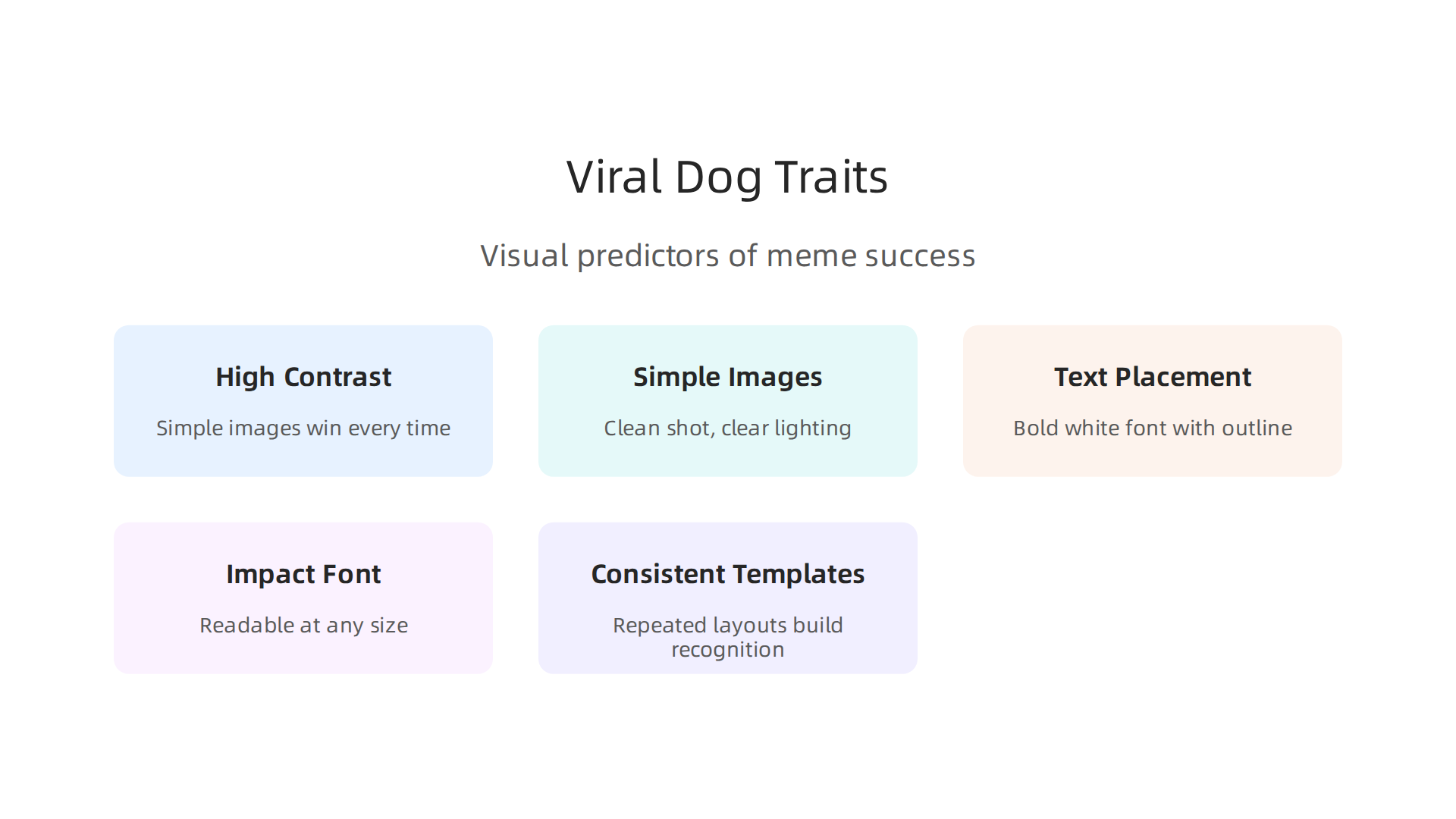
High-contrast, simple images win every time. Cluttered photos with busy backgrounds confuse the brain. A clean shot of a dog’s face, with clear lighting and strong colors, grabs attention fast. Think of the classic Doge meme. That simple, static image of a Shiba Inu with a raised eyebrow works because there is nothing else to distract you.
Text placement and font shape matter a lot. The best funny meme pictures put the text in a bold, white font with a black outline. That style, often called Impact font, is easy to read on any screen. The text sits at the top and bottom of the image. This layout gives the dog’s face the center stage. If the text covers the dog’s eyes or nose, the humor falls flat.
Consistent character templates build loyalty. Memes like Doge, Cheems, and the side-eye dog work because they follow the same pattern every time. You know what to expect. That familiarity makes you laugh faster. According to the Kapwing Dog Memes collection, these templates become shorthand for specific emotions. When you see Cheems, you already know the joke is going to be about feeling awkward or outdated. That repeat engagement keeps people coming back to share more.
When you understand these traits, you start to see the same principles at work in other forms of humor. For example, funny characters in books also rely on consistent traits and simple designs to make us smile. If you love watching dogs side eye, you will probably enjoy reading about funny fictional dogs that steal the show in stories.
And if you want a book that uses humor just as cleverly as a viral meme, Read Book 1 for a sci-fi comedy built on wit and personality.
3. From LOL to ROI: How Brands Leverage Funny Meme Pictures to Connect with Audiences
So, how do you go from laughing at a funny dog picture to truly trusting a brand? Smart companies in 2026 have cracked the code. They use funny meme pictures not just for a quick laugh, but to build genuine bridges with their audience.
The numbers prove this works. According to recent 2026 marketing benchmarks, meme campaigns drive an average engagement rate of 8.4%, compared to just 1.9% for standard digital ads. Brands that truly master humor see engagement rates as high as 60%. These are not just passive views. They are active shares, saves, and comments that boost visibility without paid ads.
Why does humor work so well for business? A simple, relatable dog pictures or a perfectly timed dogs side eye cuts through the noise. You laugh first, and you trust second. A brand that makes you smile feels like a friend, not a sales pitch. This softens promotional resistance instantly.

The reader’s brain thinks, "They get me," instead of, "They are selling me something."
The most successful campaigns invite the audience to participate. A brand posts a photo of a dog with a curious expression. Then they ask fans to caption it. This user-generated content spreads organically because it feels real. It comes from peers, not a corporate boardroom.
Building this kind of relatable voice takes practice. It is the same skill authors use to write lovable characters. In fact, many of the principles are similar to the ones that make truly funny fictional dogs that steal the show so memorable.
If you want to keep exploring how humor creates connection and community, check out our full list of reads guaranteed to make you smile. Browse Recommendations
4. The Psychology of Anthropomorphism: Why We Laugh at Dogs Acting Human
Have you ever looked at a dog giving you the side eye and thought, "Wow, they are definitely judging my life choices"?
That moment of projecting a human thought onto a simple dog expression is the secret behind the best funny meme pictures in 2026. This type of humor has a fancy name: anthropomorphism. And our brains are wired to love it.
When you see a dog pictures with a caption that gives it an "inner voice," your brain detects a small mismatch. A dog cannot actually be curious about a 401k statement. But resolving that playful tension feels great. According to research, humor processing involves detecting this mismatch and then enjoying a pleasant emotional reward (Source: PMC). That reward is a rush of dopamine.
Harvard Medical School confirms that humor triggers the brain’s reward centers, releasing dopamine and helping us process emotions positively (Source: Harvard Medical School). Combine that with the stress-reducing power of laughter, which lowers cortisol levels (Source: Stanford Lifestyle Medicine), and you have content people need to share.
This is why a caption that says, "My dog is very curious about why I am crying over a car commercial," works so well. It triggers empathy. We have all felt that way. The dog stops being a pet and becomes a relatable friend.
This technique of building humor through character voice is something skilled writers use on purpose. If you want to see how these psychological principles create full stories, check out how absurd humor shapes unforgettable characters in The Genius of Absurd Humor.
Understanding this psychology helps you create funny meme pictures that feel like tiny stories. And if you love exploring how humor builds these connections, keep going. Browse Recommendations for more reads that master the art of character and comedy.
5. Meme Fatigue and the Quest for Novelty: How Creators Keep Dog Content Fresh
You have seen the same dogs side eye template eight times this week. The tenth time, it barely gets a smirk. That is meme fatigue, and it is real.
The average lifespan of a meme format has shrunk dramatically. Research shows it dropped from 23.6 months in 2008 to just 4 months by 2023, and trending formats fade even faster in 2026 (Source: Jenova.ai). Overexposure hits the brain’s reward system hard. The same joke pays back less and less dopamine each time.
So how do creators keep funny meme pictures feeling fresh?
They remix the templates with unexpected twists. A classic dog pictures caption like "my dog is very curious about why I am crying" works great once. But the best creators flip the script. They swap the emotion, change the context, or add an absurd punchline that breaks the expected pattern.
Another tactic is going interactive. "This or that" polls, caption contests, and voting posts turn passive viewers into participants. Engagement spikes because people get to choose or contribute. That breaks the passive scrolling loop and reduces fatigue.
Writers of humorous fiction use the same trick to keep laughter alive across a whole story. They reinvent character types and subvert reader expectations. If you want to see how classic dog archetypes get fresh spins on the page, explore our list of funny fictional dogs for ideas.
The lesson is simple: repetition kills comedy. Surprise revives it. If you are hunting for more humor that feels new, Browse Recommendations for reads that keep the unexpected coming.
6. Dog Memes as Social Currency: Building Communities Through Shared Laughter
Ever sent a funny meme picture to a friend and instantly felt closer? That is social currency at work. Dog memes do more than make us laugh. They strengthen bonds between people.

Research from 2025 found that sharing memes is linked to greater online bonding social capital. A study published by Sage Journals showed that meme sharing, even aggressive humor styles, can build stronger connections within groups. This idea is supported by newer work in 2026 that explores how memes shape identity and build community online.
When you send a dog pictures caption like "my dog is very curious about why I am crying" to a friend who gets it, you reinforce a shared inside joke. That low-stakes exchange opens the door for conversation. It says, "We get each other."
Niche dog meme pages take this further. A page dedicated to golden retrievers or corgis creates a micro-community where members feel a sense of belonging. They share the same love for that specific breed. They speak the same visual language. The Penn State Media Effects Research Lab found that Internet memes play a big role in creating a sense of belonging and collective identity in online communities. When you join a page for dogs side eye memes, you are not just scrolling. You are becoming part of a group that appreciates the same quirky humor.
Shared laughter helps communities stick together. If you enjoy seeing how classic dog archetypes get fresh spins in fiction, check out our list of funny fictional dogs for more character ideas.
Want to find more humor that brings people together? Browse Recommendations for laugh out loud reads that build their own kind of community.
7. The Dark Side of Dog Memes: Copyright, Ethics, and Misuse
Not everything about dog memes is tail wags and belly laughs. Behind your favorite funny meme pictures, there are real problems worth knowing about. Let’s talk about three big ones.
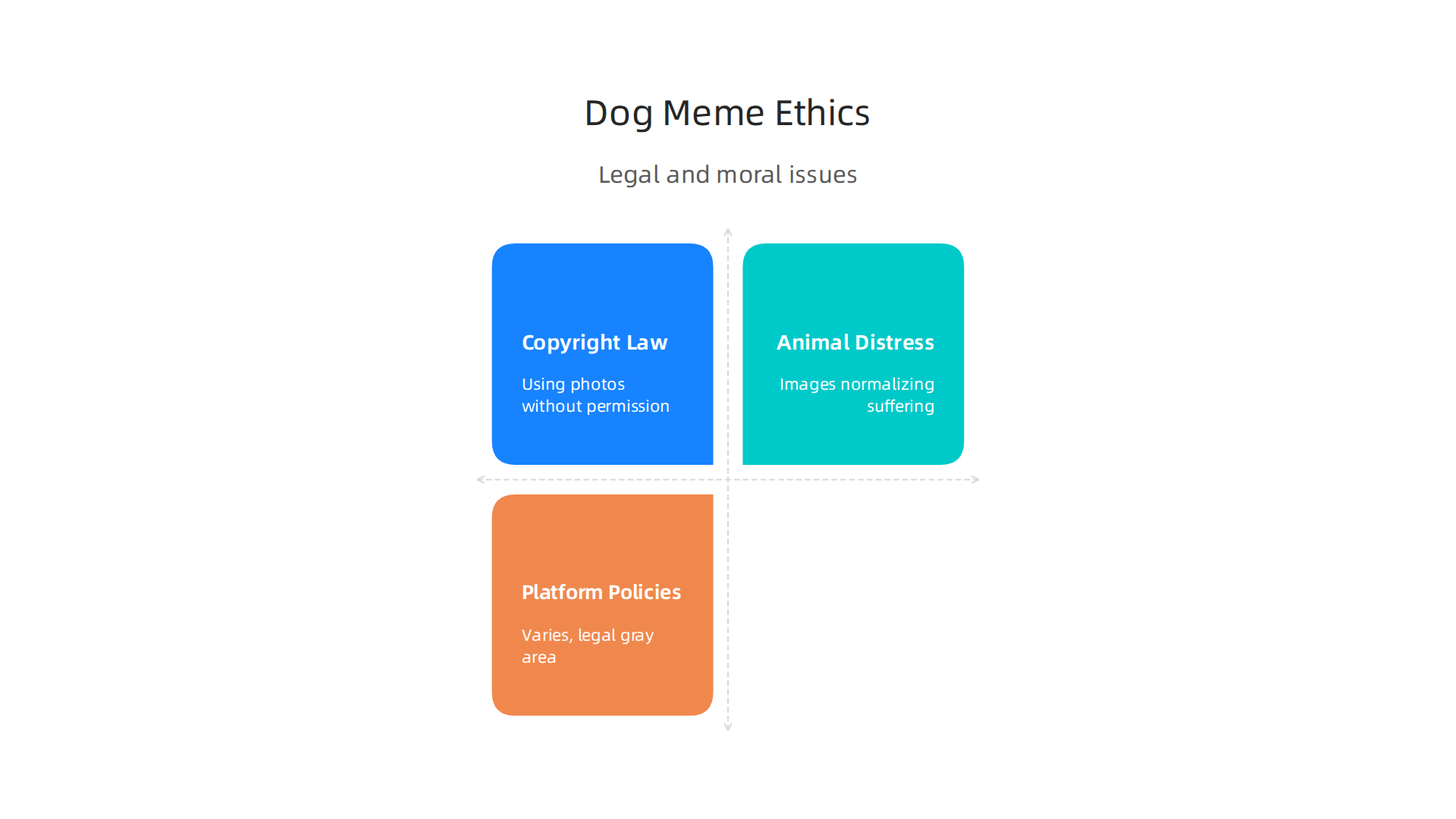
First, copyright law is tricky here. Many viral memes use photos taken by professional photographers or pet owners without permission. When someone creates a meme using copyrighted material without asking, they are technically infringing on the copyright holder’s rights. The law around memes and fair use varies by country and context. Some uses might qualify as fair use, but there is no guarantee. Posting a meme that contains copyrighted material could lead to legal action, especially if you use it commercially. Most casual sharers never think about this, but the risk is real.
Second, some dog memes show animals in distress. A picture of a scared dog or one in an uncomfortable situation might get laughs, but it can normalize animal suffering. When you see dogs side eye captioned as grumpy or dramatic, the dog might actually be stressed. Being mindful about which images we share matters.
Third, platform policies on meme sharing are all over the map. What is allowed on one site might get you banned on another. This creates a legal gray area that leaves creators and sharers guessing.
The lesson here is simple. Enjoy the humor, but think before you share. If you love the creativity behind funny animal content, you might also enjoy seeing how writers craft iconic comic characters. Check out our guide to funny fictional dogs for character inspiration that is fully legal to enjoy.
Want more laughs that keep things light and ethical? Browse Recommendations for books that bring joy without the baggage.
8. Tools of the Trade: Best Software and Apps for Creating Funny Meme Pictures
Now that you know the ethical side of sharing funny meme pictures, you might want to make your own. The good news is you do not need to be a designer to create something shareable. Plenty of tools let you turn your best dog pictures into laugh out loud content in minutes.
Start with free options. Canva is a top choice for beginners because it offers meme templates and easy text overlays. You can upload your own photo of a dogs side eye moment and add a caption that fits. It works right in your browser or on your phone. Another solid free tool is Kapwing. It lets you quickly edit video memes too. Both are mentioned in roundups of the best meme makers for 2026 Filmora.
If you want something even simpler, try the Mematic app. It has over 10 million downloads and a huge library of templates. You can grab a classic format and drop in a line like “my dog is very curious” to see what sticks. Mematic is available on both Google Play and the Apple App Store.
For more control, Photoshop gives you full power over every pixel. But be warned, the learning curve is steep. Most people do not need that level of detail for a simple funny meme.
AI powered meme generators are popping up everywhere in 2026. They can write captions and suggest images. But they often lack the human touch. A real photo of your own dog with a clever caption usually wins over a generic AI creation.
If you want more inspiration that goes beyond a single image, take a break from making memes and explore how writers build comedy into characters. Our guide to funny fictional dogs can spark ideas for your next caption or story.
Ready for a full book that matches that same playful spirit? Browse Recommendations for laugh out loud reads worth your time.
9. The Future of Visual Humor: AI, AR, and the Next Generation of Dog Memes
So where do funny meme pictures go from here? If you think today’s dog pictures are hilarious, wait until you see what is coming next. The way we create and share memes is changing fast.
Generative AI can now whip up brand new meme concepts in seconds. Imagine typing "make a meme about a dogs side eye in a spaceship" and getting a dozen options instantly. Tools like those highlighted in recent AI meme creation guides are making this possible Jenova AI. But here is the catch. Authenticity becomes a real question. A meme that feels too perfect or too polished often loses the raw charm we love. The funniest funny meme pictures usually come from real, messy, human moments.
Augmented reality is also stepping into the game. Think about AR filters that let you put a silly hat on your dog in real time or turn your living room into a giant dog park. These interactive experiences make humor something you do not just look at. You play inside it.
The line between content made by you and content made by a machine is blurring. Research on internet meme marketing shows that memes now live and die faster than ever Sage Journals. As AI tools get smarter, the challenge is keeping the human spark alive. Your own photo of your dog giving that side eye will likely always beat an AI version. That realness is what makes us laugh.
If this mix of humor and future tech excites you, check out some stories that explore playful worlds too. Our collection of funny fictional dogs can give you more ideas for your next caption or creative project.
Browse Recommendations for fun reads that match this same imaginative energy.
10. How to Measure the Impact of Your Dog Meme: Metrics That Matter
You have posted your funny meme pictures. You got some likes. But did it actually work? In 2026, we can do better than guessing. The first metric to watch is engagement rate. Meme campaigns average an 8.4% engagement rate, much higher than the 1.9% standard content gets Business Memes 2026. Likes are nice, but shares and comments show your dog pictures truly connected with people.
Next comes sentiment analysis. A dogs side eye meme might get tons of reactions, but were they positive? Did people find it funny, or did it miss the mark? Research shows memes directly shape brand perception The Impact of Meme Culture on Brand Perception. Checking the tone of comments helps you understand if your humor landed as intended. This is where the human spark we talked about earlier really matters.
Finally, look at the long game. Did the meme drive traffic to your site or increase interest in what you do? Brands mastering this are seeing huge returns Pulse Advertising. The goal is to turn a quick laugh into lasting curiosity. Maybe a funny caption makes someone say "my dog is very curious too" and click through to find more stories, like our collection of funny fictional dogs.
So measure the likes, check the sentiment, and track the clicks. When your funny meme pictures start sending people on a journey to discover new worlds, you know the meme truly worked. If you are curious to explore stories with that same playful energy, visit The Ridiculous and see where a little curiosity can take you.
Summary
This article explains why funny dog meme pictures dominate our feeds and how they work from both a psychological and practical perspective. It covers the dopamine-driven surprise loop that makes us laugh, the visual and typographic traits that predict virality, and why anthropomorphism makes dog captions land so well. The piece also shows how brands turn laughs into engagement and ROI, how creators fight meme fatigue, and how memes function as social currency in niche communities. It flags real risks—copyright, animal welfare, and platform rules—while listing accessible tools for making memes and outlining future trends like AI and AR. After reading, you’ll understand what makes a dog meme shareable, how to make one responsibly, and which metrics to track to know if it’s working.