The Genius of Absurd Humor in Super Robot Monkey Team Hyperforce Go
Introduction
Do you remember the first time you heard the name Super Robot Monkey Team Hyperforce Go!?
It sounds like a joke. Like a kid just shouted random words, and someone turned it into a cartoon. In 2026, it almost sounds like something a Tesla Optimus Robot would say after watching too much anime. You are not wrong to think it is strange. But there is a lot more going on under the hood.
The show was the first original series produced for the Jetix block, first airing back in 2004. Because of the wild name, many people wrote it off as random noise for kids. They missed the point.
Here is the thing. The comedy in this show is not an accident. It is a great example of deliberate comedic craft. The writers used surprise, character dynamics, and perfect timing to create something that still has a strong cult following in 2026. This article breaks down the specific techniques that make this giant robot team a hidden gem.
If you want to see how animal characters drive silly humor, check out our look at funny monkey characters that keep us laughing for generations.

Are you ready to see how this monkey team mastered the art of the joke?

Or maybe you want to dive into hilarious fiction built for adults who love smart, absurd comedy. Browse Recommendations for your next laugh out loud read.
Setting the Stage: The Absurd Premise
So what exactly is this show about? Imagine someone took five different action figures and tossed them into a blender. You have a giant robot. You have a team of monkeys. You have superpowers. And you have the high energy of a Japanese anime. That is Super Robot Monkey Team Hyperforce Go! in one sentence.
The show first aired in 2004 as the first original series for the Jetix block. It was a joint production between the United States and Japan. You can see the style of both countries in every scene. The action feels big. The jokes land fast. And the colors are so bright they almost pop off the screen.
Here is the thing. The creators were not confused about what they were doing. They knew the name was a mouthful. They knew the concept was wild. But they did not care. The absurdity was the whole point. The mashup of superhero, robot, monkey, and team elements was a deliberate choice. They wanted to push the limits of what a kids cartoon could be.
At first, the weirdness turned some people away. Parents did not know what to make of it.

Some kids were confused. But a small group got it. They loved the chaotic energy. They loved how the show did not apologize for being silly. This niche audience grew into the cult following we still see in 2026. The show has solid ratings on Rotten Tomatoes from people who appreciate what it was trying to do.
That willingness to be weird set the stage for everything. If the show had tried to be normal, the comedy would have fallen flat. But because the premise was ridiculous from the start, the writers had permission to go big. They could make a joke about a monkey driving a robot, and it just felt right.
The strange premise was not a weakness. It was the secret weapon.
If you enjoy seeing animal characters in wild, funny situations, check out our look at funny monkey characters that keep us laughing for generations. And if you want to explore more stories that blend the weird with the hilarious, Browse Recommendations from our library of funny fiction.
The Many Facets of Humor in Super Robot Monkey Team
Let’s get into the real magic. The humor in Super Robot Monkey Team Hyperforce Go! is not one note. It is a full orchestra of jokes.
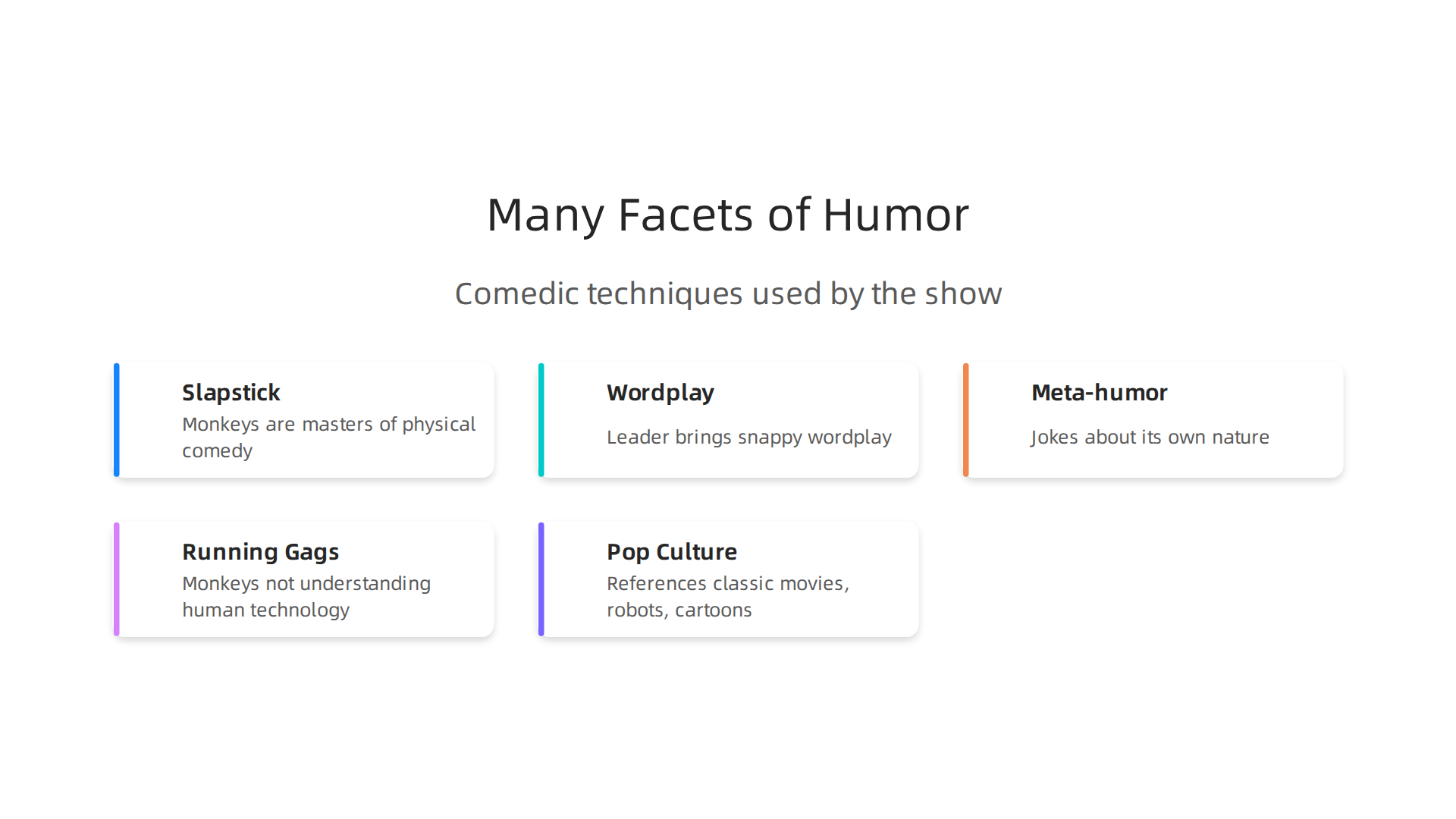
The show uses slapstick, wordplay, meta-humor, running gags, and pop culture references all mixed together.
According to a recent study on animated cartoons, shows that combine multiple humor styles create deeper emotional engagement with viewers. That research, published in the Journal of Social Research, explains how different types of comedy speak to different parts of our brain. The show understood this instinctively.
Each character brings a unique comedic style. The giant robot driver loves to deliver sarcastic one-liners. The monkeys are masters of physical comedy and goofy faces. The leader brings snappy wordplay. And the villain? He is dramatic and over the top. These layers mean that a single scene can make both kids and adults laugh for different reasons. You might be laughing at the monkey falling down while your brain picks up a clever reference hidden in the background.
This layered approach is why the show feels so ahead of its time. Compare it to hits like Adventure Time, which also used layered jokes for different age groups. Super Robot Monkey Team did that years earlier. The show understood that humor is not just about making someone laugh once. It is about creating moments that feel fresh even after the tenth watch. Studies on motives for viewing animated shows confirm that viewers return to series because the comedy rewards repeat attention.
The running gags are a perfect example. The monkeys have this ongoing joke about not understanding human technology. It appears in nearly every episode. But the writers find new angles each time. One episode it is about a toaster. The next it is about a telephone. The joke stays the same but the delivery changes. That is smart writing.
The pop culture references are another layer. The show drops jokes about classic movies, famous robots, and even older cartoons. If you know the reference, you get an extra laugh. If you do not, the joke still works on its own terms. That is hard to pull off.
Maybe that is why people still talk about the show in 2026. Laughter is good for us. The Mayo Clinic confirms that laughter relieves stress and boosts mood. This show delivers those benefits in spades.
If you love this mix of character-driven comedy and silly situations, do not stop here. Check out our collection of funny monkey characters that keep us laughing for generations for more serious laughs. And when you are ready to find your next hilarious read, Browse Recommendations from our library of funny fiction.
The Absurdist Core: Why Nonsense Works
Now let’s talk about the secret sauce. At its heart, Super Robot Monkey Team Hyperforce Go! runs on absurdism. This is not random silliness. It is a deliberate comedic strategy.
Absurdist humor works by breaking our expectations. Something happens that has no logical explanation. A character says something that makes no sense. And that is exactly what makes it funny. Recent research on absurdism confirms that this type of comedy becomes even more enjoyable when the brain recognizes the lack of logical resolution. The surprise is what makes us laugh.
The show is full of these moments. A monkey might suddenly start talking about something completely unrelated to the scene. A visual gag appears for no reason and disappears just as fast. The giant robot itself is a joke that keeps giving. A massive, powerful machine that is also a source of constant absurdity. That is pure comedic gold.
The show uses these absurdist moments to explore bigger ideas. A random joke about a machine might actually be a comment on technology taking over our lives. A monkey’s non-sequitur about the meaning of life hides a deeper truth. The absurdity serves as a cover for the show’s more serious themes. This is what makes it so rewatchable. You catch something new each time.
Here is the kicker. This style works for everyone. Kids laugh at the surface silliness. A monkey makes a funny face. A robot falls over. Simple and effective. But adults catch the subversive commentary underneath. They see jokes about technology, about power, about human behavior. The same scene works on two different levels. Studies on humor in children’s media confirm that this layered approach is highly effective for engaging both younger and older audiences.
This is why the show feels so fresh in 2026. Absurdism never gets old. If you enjoy this kind of smart, layered comedy, check out our collection of funny monkey characters that keep us laughing for generations. These characters share that same spirit of playful nonsense.
And if you want more absurd adventures with a sci-fi twist, Visit Ridiculous to explore a world where comedy and cosmic chaos collide.
Character Archetypes as Comedy Engines
Now that we see how absurdism sets the stage, let’s meet the actors. The super robot monkey team is not just a group of heroes. Each character is built around a classic comedy archetype. And the show has fun flipping those archetypes upside down.
Chiro is the young leader. In most shows, the leader is wise and confident. Chiro grows into that role. He makes mistakes. He learns. The comedy comes from his awkward attempts to lead a team of superpowered monkeys. His earnestness often leads to funny footnotes in the dialogue.
Antauri is the wise old master. He speaks in riddles and meditates. But sometimes his wisdom is wrong. That subversion gets a laugh. Sprx is the cocky gunslinger. He talks big but often falls flat. Gibson is the genius inventor. Yet he constantly creates things that backfire. The smart guy fails. That is classic comedy.
Nova is the tough fighter. She is strong and serious. But she also cares deeply. Her gentle side surprises everyone. Otto is the comic relief, but he sometimes drops the most profound truths. The show bends each archetype just enough to keep you guessing.
These character dynamics create recurring gags that reward long-time viewers. Sprx and Gibson always argue. Antauri’s cryptic advice usually ends with a punchline. Otto’s random comments turn into plot points. According to the character breakdown on TV Tropes, each monkey fits a specific role that gets twisted for comedic effect.
That is why we keep coming back.
If you enjoy character-driven comedy and witty writing, explore more hilarious monkey characters in our collection of funny monkey characters that keep us laughing for generations. They share that same playful spirit.
And if you want a fresh sci-fi comedy built around unforgettable characters, Visit Ridiculous and discover a world where humor and chaos collide.
Parodying the Superhero Formula
You know the drill by now. A regular kid finds a secret power source. Five colorful heroes appear. A villain monologues about destroying the city. The team forms a giant robot and saves the day.
Super Robot Monkey Team Hyperforce Go! knows these beats by heart. And it has a lot of fun twisting them.
The show lampoons common superhero tropes starting from the very first episode. Chiro does not earn his leadership through bravery. He stumbles into the giant robot and gets handed the keys. The team does not form through destiny. The monkeys just wake up and follow the nearest kid with a pulse.
One episode directly spoofs the classic origin story. The hyperforce gets captured. A villain explains his evil plan in painful detail. Then the monkeys complain that his monologue is too long. That is the joke. The show knows we have heard this speech a hundred times before.
And the writers love to play with the sentai formula. According to the sentai tradition on TV Tropes, teams usually follow strict color-coded roles. The red one is brave. The blue one is smart. The super robot monkey team follows this at first. Then it breaks every rule. Sprx talks back to the leader. Gibson refuses to explain his inventions. Otto falls asleep during battle.
Specific episodes directly parody shows like Teen Titans and Justice League. One episode features a villain who looks suspiciously like a certain DC brute. Another has the team split up in a classic mind game episode. But the outcome is never what you expect. The smart guy gets the math wrong. The strong one gets scared of a spider. The humor works because we already know the formula.
This approach from the subversion found in series like the Dragonball Z Ginyu Force parody on Tropedia Fandom shows a similar playfulness. The show respects the genre enough to understand it. And it loves the genre enough to laugh at it.

So the parody does two things at once. It feels like a loving tribute. And it feels like a clever critique. That is a rare balance.
If you like stories that play with familiar formulas, check out our collection of funny monkey characters that keep us laughing for generations. They share that same playful spirit.
And if you want a fresh sci-fi comedy built around unforgettable characters, Visit Ridiculous and discover a world where humor and chaos collide.
Deconstructing Sentai Tropes
So the show borrows heavily from Power Rangers and Japanese Super Sentai. But it never does it straight.
If you know the classic sentai tradition, you know the rules. Five heroes. Color-coded suits. A transformation sequence. A team roll call. A giant monster battle at the end. Every episode follows this map.
Super Robot Monkey Team Hyperforce Go! follows that map too. Then it draws funny footnotes all over it.
The transformation sequences are a perfect example. In a typical sentai show, the heroes strike dramatic poses. The camera lingers. The music swells. Here? The monkeys just glow for a second. Sometimes they forget to pose. One time Gibson transforms while reading a book. He does not even look up.
The team roll call gets the same treatment. Instead of shouting their titles with pride, the monkeys argue about who goes first. Sprx interrupts Antauri mid-sentence. Otto picks his nose during the lineup. The whole thing falls apart. And that is exactly the point.
The deconstruction exposes the absurdity of the genre while celebrating it. The show loves the big giant robot battles. It just also thinks it is a little silly that five monkeys pilot a robot while shouting color names. The super robot monkey team knows it looks ridiculous. And it leans into that.
This kind of parody has a long tradition. The Ginyu Force from Dragonball Z is a classic example of playfully subverting sentai tropes. They have the poses. They have the colors. But they are villains. And they are goofy. The joke works because we know the formula.
If you enjoy characters who twist familiar rules into something fresh, you will love our collection of funny monkey characters that keep us laughing for generations. They share that same playful energy.
And if you want a sci-fi comedy that builds a whole world around the chaos, Visit Ridiculous and see how far the genre can bend.
Why It Endures: Nostalgia and Cult Status
So the show was canceled too soon. But that did not kill it. The super robot monkey team found a second life online.
Fans built a whole world around the show. They create memes, fan art, and rewatch videos. The absurd humor fits perfectly with the way Gen Z shares content today. A 2026 study on absurdist humor found that genuinely weird and self-aware comedy connects more with younger audiences looking for authentic laughs. The monkeys tap right into that.
The nostalgia factor helps too. Anyone who watched mid-2000s animation remembers the bright colors, the fast pacing, and the edgy humor that felt smarter than your average kids show. That era produced a lot of humor that still lands because it trusted its audience to get the joke. The monkeys trusted you to laugh at the tropes while still enjoying them.
And streaming changed everything. New viewers discover the show every day. They find it on platforms alongside classics like Dragonball Z or other parodies. The giant robot battles look hilarious to a fresh pair of eyes. The funny footnotes the show wrote on its own genre make more sense now than they did back then.
The fandom keeps the spirit alive. You can find discussion threads dissecting every joke.

You can watch compilation videos of Sprx being sarcastic. You can read fan theories about the tesla optimus robot references. The show never got a proper ending. But the fans wrote their own.
If you love characters that break all the rules while making you laugh, check out these funny monkey characters that keep us laughing for generations. They share the same chaotic energy.
And if you want to dive deeper into a world built on absurd comedy, Explore the Series and see where the genre bends next.
Influence on Later Animated Comedies
So the fans kept the show alive. But the creators kept its spirit alive too. You can see the fingerprints of the super robot monkey team all over cartoons that came after.
Shows like Adventure Time and Steven Universe took the same approach. They mixed serious stakes with silly jokes. They trusted young viewers to handle complex emotions wrapped in absurd humor. The fast talking, the genre bending, the willingness to be completely weird one minute and heartfelt the next. That DNA comes straight from shows like SRMTHFG.
Think about Chiro, the main protagonist. Over the course of the series, he grows as a person and as a fighter. That character arc feels familiar now. But back then, it was bold to let a kid lead a team of monkeys in a giant robot while dealing with real themes like leadership and loss. The Chiro character page shows how layered his journey was.
Later shows took that blueprint and ran with it.
The show also punched holes in the fourth wall before it was trendy. Those funny footnotes on the action genre taught a generation of writers that you could make fun of tropes while still using them. This meta humor became a hallmark of 2010s animation. You hear it in the way characters react to their own situations. You see it in the way plots fold back on themselves.
Genre blending was another gift the show left behind. It mixed mecha battles with mystical elements, sci-fi with folklore, slapstick with drama. That mix felt strange at first. Now it feels normal. Shows don’t have to pick one lane anymore. They can be everything at once.
If you enjoy writing dialogue that lands like those fast monkey quips, you might appreciate this guide on Good Roasts: The Writer’s Guide to Crafting Witty Insults That Work. It breaks down the same kind of sharp banter the team used so well.
And if you want to see how absurd comedy evolves in a new universe built on that same chaotic energy, Explore the Series and see where the genre bends next.
Conclusion: A Masterclass in Nonsense
So what do we take away from all this monkey madness? The super robot monkey team isn’t just a pile of random jokes. It’s a carefully built machine where every piece of absurdity has a purpose.
The show rests on three solid pillars. First, the absurdist core. The premise itself (a kid plus five monkeys piloting a giant robot to fight aliens) is ridiculous. But the writers used that freedom to explore real emotions without ever feeling heavy. Second, the character archetypes. Each monkey represents a different kind of humor: the grouch, the goofball, the smart one with funny footnotes. They bounce off each other perfectly. Third, the genre parody. The show knew exactly how to mock giant robot anime tropes while still delivering exciting action. That balance is hard to pull off.
Research into animated humor shows that series like this use comedy to communicate deeper themes. The jokes aren’t just for laughs. They keep viewers coming back. And that’s where the rewatch value lives. Every time you watch, you catch a new layer. A background gag. A line that foreshadows something later. The show trusts you to find it.
If you loved watching these monkeys bicker and bond, you’ll enjoy exploring more funny monkey characters that keep us laughing for generations. It’s a look at how primate personalities still make us smile.
The final lesson is this. Chaos can be crafted. Nonsense can be a masterclass. The super robot monkey team proves that when you build your humor with intent, it sticks. You don’t need to be serious to be meaningful. You just need to know exactly why you’re being silly.
Ready for more absurd comedy that knows what it’s doing? Explore the Series and see where the next great joke comes from.
Summary
This article examines how Super Robot Monkey Team Hyperforce Go! uses deliberate comedic craft to turn a wildly absurd concept into a lasting cult favorite. It breaks down the show’s premise, the mix of slapstick, wordplay, meta-humor and running gags, and the role of absurdism in surprising audiences while hiding sharper themes. You’ll learn how distinct character archetypes and their flipped expectations fuel recurring jokes, how the series parodies superhero and sentai formulas, and why those choices increase rewatch value. The piece also traces the show’s afterlife—fandom, nostalgia, and streaming discovery—and its influence on later animated comedies that blend heart with ridiculousness. Readers leave able to spot the writing techniques that make layered humor work and apply those tactics to their own comedy or media analysis.