Funny History Podcasts That Make the Past Hilarious
Introduction: Why We Love History That Makes Us Laugh
Let us be honest for a second. Did your eyes glaze over in history class? You are not alone. All those dates, dusty names, and battles can feel like a hard sleep. But here is the thing. History does not have to be boring. Not even a little.
In 2026, something big is happening in the audio world. Podcasting now reaches 53% of the U.S. population each month. And guess what people love to listen to? Comedy. According to recent data, comedy is the top podcast genre with 33% of monthly listeners tuning in. That makes sense. Laughter is a universal language. And when you mix laughs with learning, you get something special.

That is where funny history podcasts come in.
These shows do something amazing. They take the old stories you thought you knew and flip them on their head. A funny host does not just read facts. They tell stories with a wink and a nudge. They crack a joke about a Roman emperor. They compare a medieval king to a grumpy neighbor. They might even throw in a few funny dad jokes along the way. Suddenly, history feels alive. It becomes a conversation between friends, not a lecture.
Here is the real magic. When you are laughing, your brain stays open. You remember things better. The facts stick because they are tied to a moment of joy. That is the power of a good funny bone. It makes learning feel easy.
Does that sound good to you? Great. Because in this article, we are going to explore the best funny history podcasts available right now. We will look at why these shows work so well. We will share what makes each one unique. And we will help you find your next favorite show to binge.
History is full of weird, wild, and wonderful moments. All it takes is the right guide to show you. And if you love the art of a good punchline, you might also enjoy exploring how humor works in fiction. For a deeper look at the craft of comedy writing, check out this piece on the writer’s guide to crafting witty insults.
Ready to laugh and learn at the same time? Let us dive in.
1. The Rise of Funny History Podcasts: A Genre Born from Boredom
Did you ever think a dusty old history book could make you snort laugh? Until a few years ago, most people would have said no. The way we learned history in school made it feel like a chore. All those dates and names just seemed heavy.
But then the podcast boom of the 2010s changed everything.
The barrier to entry dropped. You did not need a big radio studio anymore. All you needed was a microphone, a funny bone, and a good story. Suddenly, two friends sitting in a living room could start a show. And that is exactly what happened.
By 2026, podcasting has grown into a giant. It now reaches 53% of the U.S. population each month. And the most popular thing to listen to is comedy. Comedy tops the charts as the number one genre. This huge audience created the perfect soil for a new type of show to grow.
The funny history podcast was born.
Some of the earliest hits showed us two different paths. On one side, you have shows like Hardcore History. They dig deep. They are serious. They are epic. On the other side, you have shows like The Dollop. They take a single weird story from the past. Then they tear it apart with jokes. They compare a confused king to a modern day office manager. They find the absurd in the real.
Why do audiences love this so much? It comes down to three things.
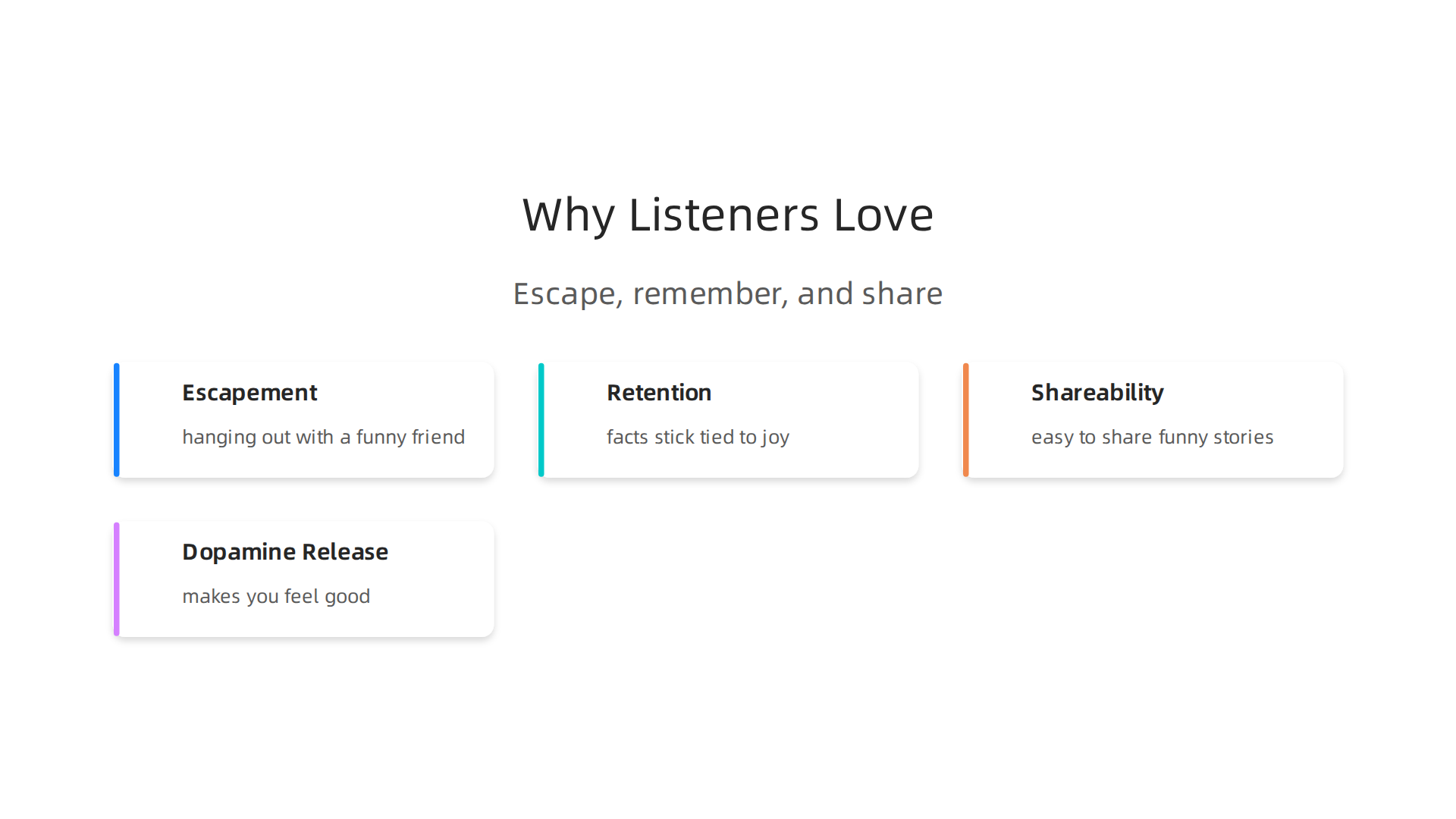
Escapement. It does not feel like homework. It feels like hanging out with a funny friend who happens to know a lot of strange facts. You relax while you learn.
Retention. Your brain loves to remember things that made you feel something. Laughter is a strong feeling. That weird fact about the dancing plague sticks in your memory because it made you laugh.
Shareability. It is easy to pass along a funny story. "You have to hear the episode about the time a pirate tried to fight a whale…" It becomes a social moment.
This whole genre relies on finding the absurd in real life. It uses many of the same tricks as a great fictional comedy. If you enjoy understanding how these comedic moments work, you might enjoy this look at absurd humor in fiction.
So the rise of the funny history podcast makes perfect sense. It came from boredom. But it thrives because it feeds our hungry funny bone.
2. Why Humor Makes History Stick: The Science of Learning with Laughter
So you know funny history podcasts are popular now. But why do they actually work for learning? It is not just a coincidence. There is real science behind it.
Here is the simple truth. When you laugh, your brain releases dopamine.

Dopamine is a chemical that makes you feel good. It also boosts your motivation and helps you remember things. A well-known article from Edutopia explains that humor activates the brain’s dopamine reward system. This stimulates long-term memory. So when a host makes a silly joke about a medieval king, your brain locks in that fact. You remember it because you smiled.
Research backs this up. A study in the ERIC database found that using humor in teaching improves student achievement and memory retention. A more recent review of studies in 2025, published by the National Institutes of Health, looked at decades of research on instructional humor. It found that humor consistently boosts student engagement and learning outcomes. Laughter is a powerful learning tool.
Humor also takes the fear out of hard topics. History can feel heavy. Wars, politics, dates. It can feel like too much. But a funny host makes it feel safe. They turn a scary battle into a story about two upset guys making bad choices. The laughter lowers your guard. A 40-year review of research on humor in the classroom confirms that it reduces student anxiety. You relax. Then you learn.
Think about your own funny bone. When you hear something that makes you laugh, you feel something. That feeling is emotional arousal. And your brain prioritizes emotional moments.

It says, "This matters. Save it." That is why you can still remember a funny joke from years ago but forget what you ate for breakfast. The same thing happens with history. A hilarious story about a dancing plague gets saved because your emotions tagged it as important.
If you enjoy understanding how comedy works on our brains, you might appreciate this deeper look at the science behind viral humor. It explains why certain jokes spread so fast.
The bottom line is simple. Funny history podcasts work because they trick your brain into learning. You think you are just having fun. But your memory is actually working harder than ever.
3. How Top Hosts Blend Facts and Jokes: Expert Techniques Behind the Mic
Now that you know why laughter helps you remember history, let’s look at how the pros actually do it. The best funny history podcasts walk a careful line. They need to be correct and funny at the same time. That is harder than it sounds.
Some hosts lean more toward serious storytelling. Mike Duncan, who made Revolutions, is a great example. He is accurate and detailed, but he adds dry humor at just the right moments. His jokes feel natural, never forced. On the other side, you have comedic hosts like those featured on Find That Pod’s list of the funniest history podcasts. These are stand-up comedians and improv artists who treat history like raw material for laughs. They research a topic, find the weirdest bits, and then spin them into a hilarious story.
So how do they keep it real? Research is everything. A host might read a book, check academic papers, and talk to experts. Only then do they start writing jokes. One podcast host even wrote about how he forced a room full of historians to laugh at a butt joke. His secret? He knew the facts cold, so he could be confident that the joke would not mislead anyone. The historians laughed because the joke was both true and silly.
Greg Jenner, the creator of a chart-topping BBC comedy podcast, also stresses this balance. In a recent conversation with the Royal Historical Society, he talked about finding the funny in public history. His technique is simple: start with solid research, then ask yourself what part of that story surprises you. That surprise is usually where the humor lives.
The key takeaway is this. Top hosts do not choose between facts and jokes. They blend them. They do the homework first, and then they let their funny bone guide the delivery. If you are a writer looking to sharpen your own comedic writing, you might find some useful tips in this guide on crafting witty insults that work. The same principles apply to history podcasting: know your material, then make it playful.
When done right, the result is a podcast that respects the past but keeps you smiling. That is the magic behind the mic.
4. Listener Favorites: The Most Popular Funny History Podcasts (2026 Picks)
You have seen how the pros blend facts with jokes. Now let’s look at the shows that do it best today. The world of funny history podcasts keeps growing every year. According to Feedspot’s 2026 ranking of comedy history podcasts, listeners love shows that mix satire, storytelling, and weird real events. Here are some top picks across different styles.
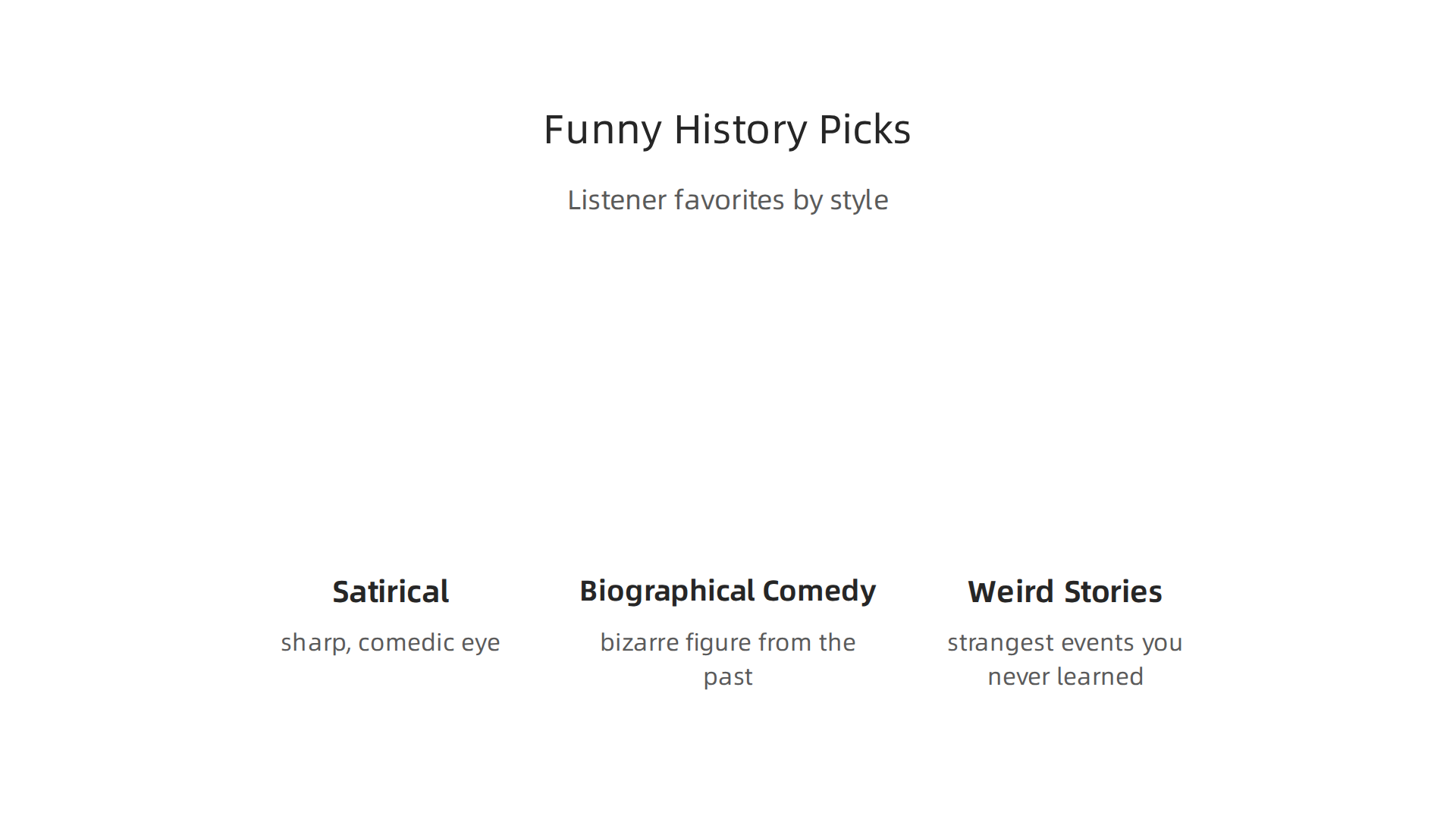
Best for satirical history: The Alarmist and You’re Dead to Me are heavy hitters. You’re Dead to Me (from the BBC) pairs historians with comedians for a fast, funny hour. The Alarmist looks at historical disasters with a sharp, comedic eye.
Best for biographical comedy: The Dollop with Dave Anthony and Gareth Reynolds remains a fan favorite. Each episode covers a bizarre figure from the past. It is one of the best comedy podcasts on Spotify for 2026, according to RSS.com. Another hidden gem is Vulgar History, which gives the Regency era a hilarious twist.
Best for weird historical stories: What the HELL Were You Thinking? and History Is Dank dive into the strangest events you never learned in school. These shows will tickle your funny bone while teaching you something new.
If you enjoy the comedic writing behind these shows, you might like exploring how absurd humor works in fiction too. Check out this piece on the genius of absurd humor for a deeper laugh.
Whether you want big laughs or smart satire, there is a funny history podcast waiting for you in 2026.
5. The Science of Learning with Laughter: What Research Tells Us
So we know funny history podcasts are entertaining. But do they actually help you learn? The answer is yes, and the science behind it is pretty fascinating.
When you laugh, your brain releases dopamine. This chemical makes you feel good and helps you remember things better. According to Edutopia’s research on humor and retention, humor activates the brain’s reward system. This stimulates long-term memory and goal-oriented motivation. In plain English, you remember more when you are having fun.
Studies back this up. A review of five decades of research on instructional humor found that humor can boost student achievement and memory retention. Another study showed that humor-embedded instruction leads to measurable growth in learning outcomes. Students who learned with humor performed better than those who learned without it.
But here is the thing. Not all humor works the same way. The best funny history podcasts do not just tell jokes. They weave humor into the story naturally. This keeps you engaged without distracting from the facts. Research on humor in online learning shows that the right kind of humor boosts both emotional and cognitive engagement.
What does this mean for podcast creators and educators? Use humor as a tool, not a crutch. A well-placed joke can make a 18th century tax law stick in your brain forever. A bad joke just wastes time. The American Psychological Association notes that humor in the classroom has many benefits when done right.
If you want to understand more about how comedy works at a deeper level, check out this look at the genius of absurd humor. It shows how the same principles that make fiction funny also make history memorable.
The bottom line? Laughter is not the enemy of learning. It is one of your best tools. So go ahead and listen to that funny history podcast. Your brain will thank you.
6. Behind the Scenes: Research Meets Comedy Craft
So how do the creators of the best comedy podcasts on Spotify pull it off? How do they make you laugh while also teaching you something real?

The answer involves a lot of hard work behind the microphone.
First comes the research. A good funny history podcast starts with solid facts. The host digs through books, articles, and sometimes even original documents. One history podcaster described the pressure this way: by checking a box saying their podcast uses humor to explain history, they had committed to being funny and accurate at the same time. That is not easy. You can see this balance play out in shows like those listed on Find That Pod’s roundup of the funniest history podcasts, where comedians take turns researching and presenting topics.
Then comes the writing. Some podcasters script every joke carefully. Others rely more on improvisation. The best approach often mixes both. A script keeps the facts straight. Improvisation keeps the energy fresh. As the golden rule of comedy writing says, you should focus on narrative and character first, then add the funny. For history podcasts, the narrative is the historical event. The funny comes in how the host tells it.
Finally, there are the safety nets: guest experts and fact-checkers. Many top shows invite historians to review episodes before they air. This ensures the jokes never rewrite history. A great example is Greg Jenner, host of the chart-topping BBC comedy history podcast. In a public conversation about finding the funny in history, he explained how he works with academic advisors to keep the show accurate.
If you are a writer or creator interested in the craft of comedy, you might enjoy learning about what makes humor work in literature. Check out this guide to how humor literary magazines set the gold standard for funny books. It shows the same principles that make a podcast hilarious also make a novel unforgettable.
The bottom line? Making a funny history podcast is a serious craft. But when done right, it makes learning feel effortless.
7. Tips for Starting Your Own Funny History Podcast
So you want to start a funny history podcast of your own? Good for you.

The world always needs more laughs and more learning. Here is some practical advice to get you going.
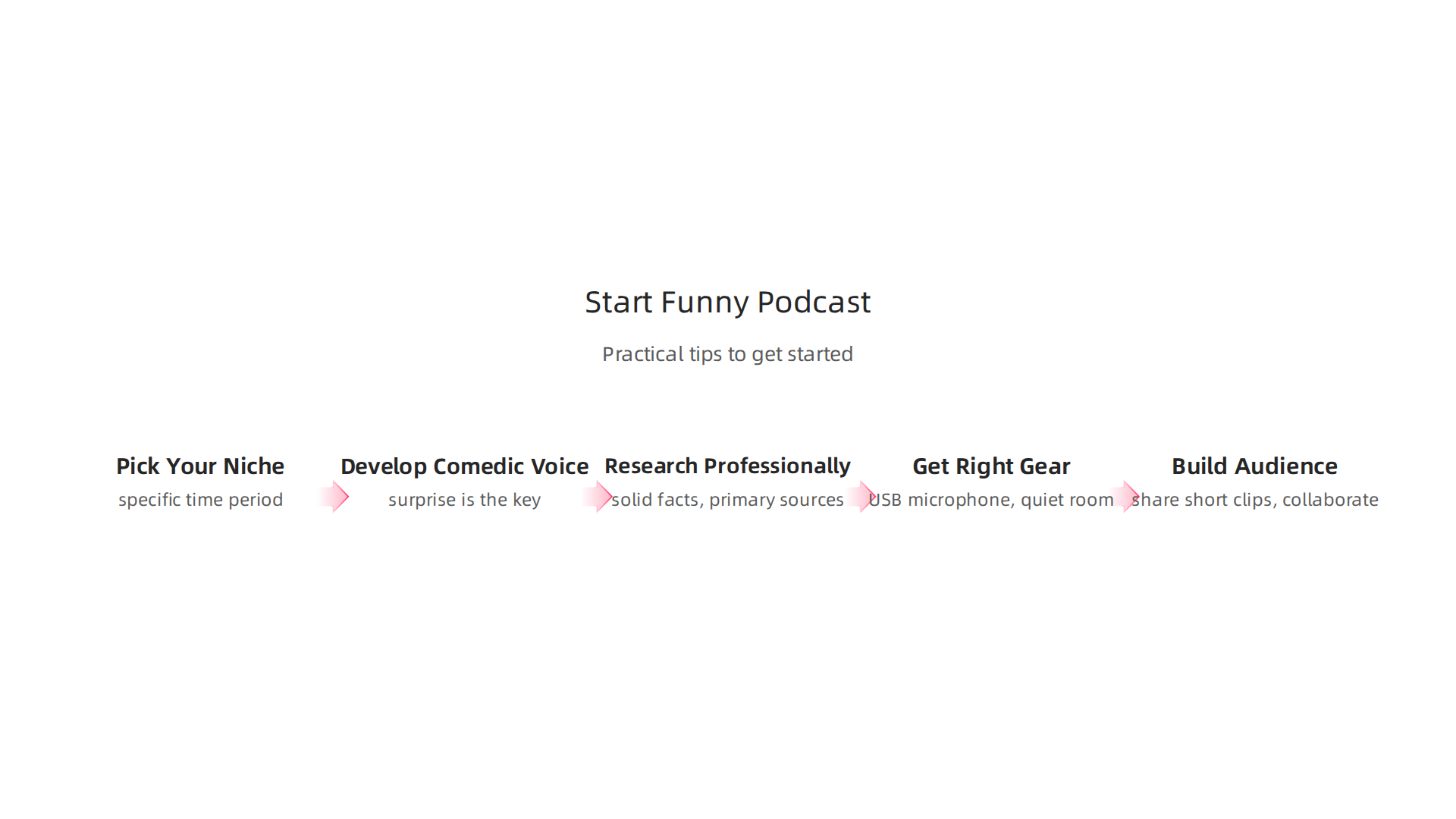
Pick your niche first. You cannot cover all of history. That is too big. Instead, pick a specific time period, a weird topic, or a unique angle. Maybe you focus on ancient Roman dad jokes. Maybe you cover only failed inventions from the 1800s. The narrower your focus, the easier it is to build a loyal audience.
Develop your comedic voice. This takes practice. Do not try to sound like your favorite host. Sound like you. As one comedy writing expert explains, surprise is the key to good comedy. You want to surprise your listeners in ways that still make sense. The same source notes that surprises which amaze readers but stay believable will add the most humor. Start by writing short scripts. Test your material on friends. See what lands.
Research like a professional. Your jokes only work if your facts are solid. Use books, academic articles, and primary sources. Build a research folder for each episode. When you write, follow the golden rule: focus on narrative and character first, then add the funny. That means tell the story correctly, then layer in your jokes.
Get the right gear. You do not need a fancy studio to start, but you do need decent audio. A USB microphone, a quiet room, and a free recording tool like Audacity will work fine. Editing for comedic timing is a skill you will learn over time. Listen to the best comedy podcasts on Spotify and study how they pace their jokes.
Build your audience one episode at a time. Share short clips on social media. Post funny 60-second snippets that show your personality. Reach out to other history podcasters for collaboration. A guest spot on another show can introduce you to a whole new crowd.
Starting a podcast is a lot of work. But if you have a funny bone and a love for history, you already have what it takes. If you want to study more about how comedy writing works in books and scripts, check out this guide to good roasts that breaks down the craft of witty writing. The same principles apply behind a microphone.
8. The Future of Humor in Historical Storytelling
The world of funny history podcasts is changing fast. Here is what the next few years might look like.
AI will help with comedy writing. Artificial intelligence tools are already helping podcasters brainstorm jokes, punch up scripts, and find funny connections between historical events. Some hosts use AI to test which lines land best. The key is using AI as a helper, not a replacement. Your human funny bone still matters most. The best comedy podcasts on Spotify will likely use more AI tools behind the scenes while keeping the human host front and center.
We will see more immersive audio dramas. Picture this: you put on headphones and suddenly you are standing in ancient Rome. A gladiator cracks a joke. The crowd roars with laughter. New sound design tools let creators build rich, funny worlds that feel real. These shows blend history and humor in ways plain narration cannot match. The list of top comedy history podcasts keeps growing, and audio drama is a big reason why.
More voices mean more laughs. Here is the exciting part. Hosts from underrepresented backgrounds are bringing fresh comedic perspectives to history. A funny history podcast about medieval Europe from a non-European viewpoint can reveal stories we never heard before. More diversity means more types of humor. It also means the genre stays fresh and surprising.
Cross-media expansion is coming. Do not be shocked if your favorite funny history podcast becomes a Netflix series or a live tour. Shows like The Dollop already do live shows in big theaters. Podcast statistics from 2026 show massive growth in the space. The line between podcast, TV show, and live comedy is blurring fast.
If you want to sharpen your own comedy writing skills, check out this guide to crafting witty dialogue. Many of those same techniques work perfectly behind a microphone.
The future of funny history podcasts looks bright. More laughs. More stories. More voices. And honestly, that is a future worth waiting for.
Summary
This article explores the rise and craft of funny history podcasts, showing how comedy and serious research combine to make history entertaining and memorable. It explains why humor improves retention—through dopamine and emotional engagement—and reviews the techniques top hosts use to balance accuracy with laughs. The piece lists listener favorites for different tastes, offers practical tips for starting a podcast (niche, research, voice, gear), and describes behind-the-scenes habits like fact-checking and script editing. It also looks ahead at trends such as AI-assisted writing, immersive audio drama, and more diverse voices entering the genre. Readers will leave able to find great shows, understand why they work, and take first steps toward producing their own funny history podcast.